Reduced Risk
Stop heavy, dead branches from falling on your property during storms.
Expert, AS4373-compliant canopy management to enhance tree health and protect your property.
Protecting tree health across Valley Heights.
For superior Tree Pruning Valley Heights, our certified arborists deliver targeted care that respects the tree's natural form.
Species common to Valley Heights like Smooth-barked Apples and Sydney Peppermints often develop large, heavy lateral branches. Professional weight reduction pruning is critical to stop these limbs tearing out during East Coast Lows.
Stop heavy, dead branches from falling on your property during storms.
Removing diseased or crossing branches extends the lifespan of your valuable native trees.
Careful thinning allows more winter light into your home without ruining the tree's shape.
We identify structural defects, deadwood, and branches causing clearance issues.
We discuss the required pruning cuts, ensuring they align with AS4373 and council exemptions.
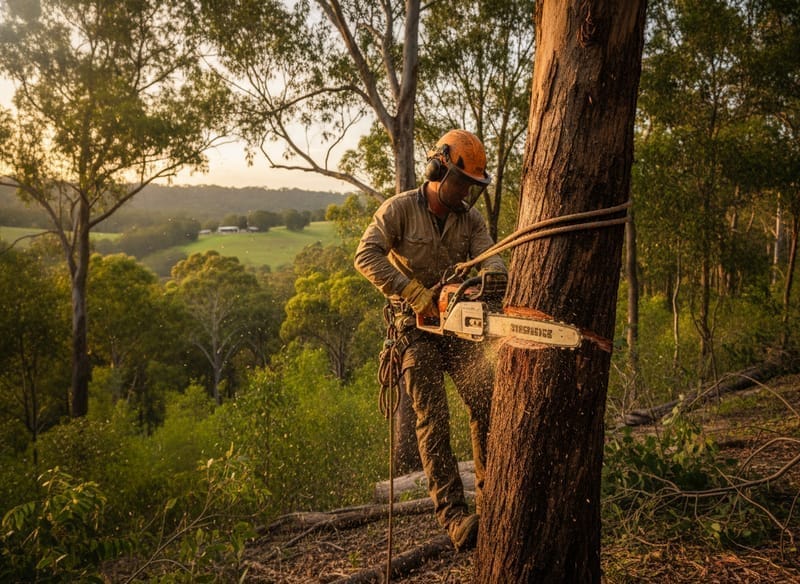
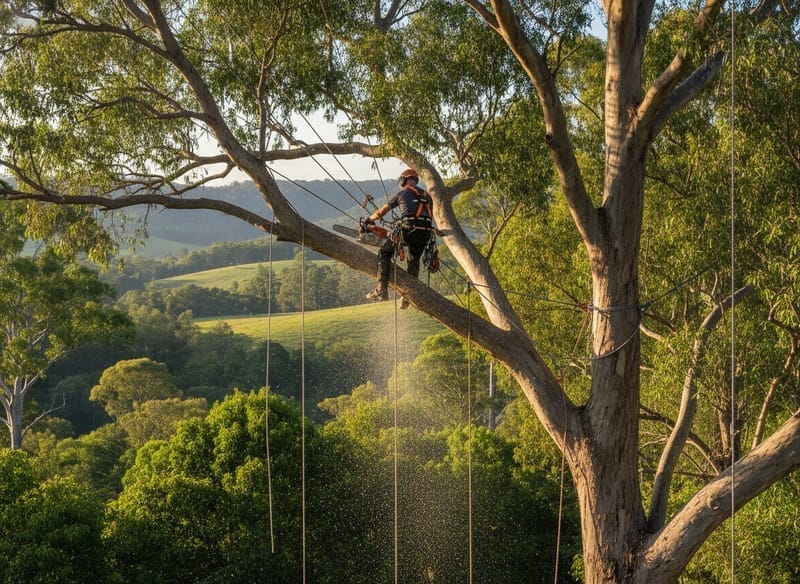
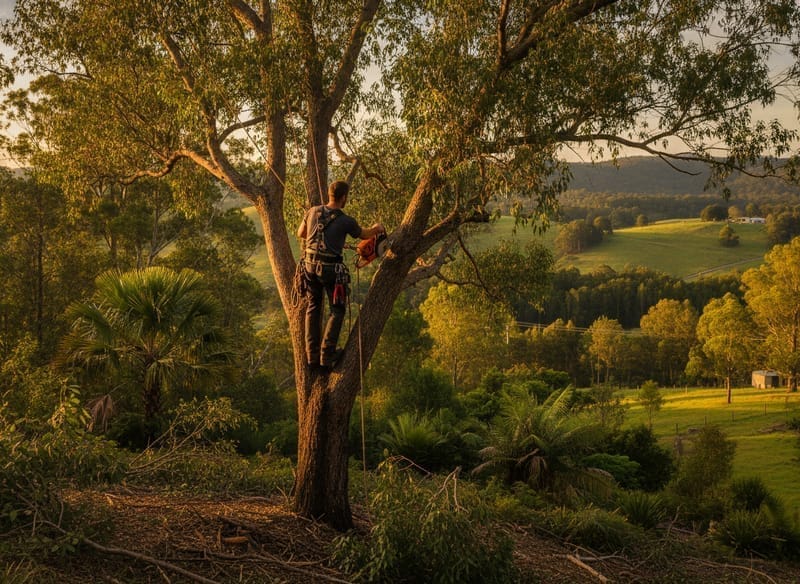
Our climbers access the canopy using non-invasive rope techniques to make clean, collar-accurate cuts.
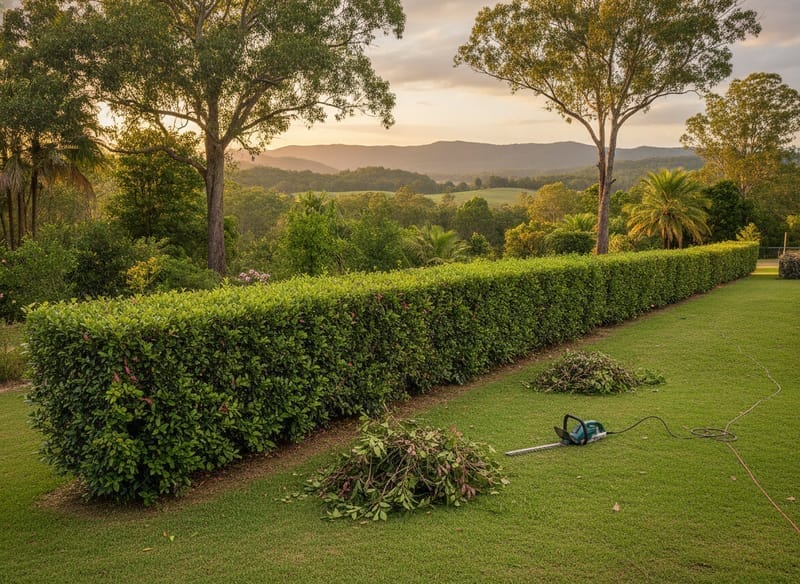
All trimmings are chipped and removed, leaving your garden spotless.
When it comes to professional Tree Pruning Valley Heights, homeowners, acreage managers, and builders trust the team at Blue Mountains Arborist. Living in this beautiful stretch of the lower-to-mid mountains means sharing your property with towering native canopy. While mature trees add incredible character and value to our local landscape, they also require active management to stay safe, healthy, and structurally sound.
Our climate presents unique challenges. With severe thunderstorms rolling through in summer, high bushfire risks, and punishing winter westerlies that regularly drop limbs across the region, neglected trees become a major hazard. We are not just a tree lopping company; we are qualified local arborists dedicated to the long-term health of your trees.
Whether you need an overhanging Sydney Peppermint safely cut back from your roofline, or a heritage-planted Radiata Pine deadwooded to protect your driveway, our team provides safe, compliant, and highly skilled pruning services tailored to the specific conditions of Valley Heights.
One of the most common issues our climbers see across the Blue Mountains is the devastating aftermath of unqualified tree lopping. Tree lopping—often sold as "topping" or "heading back"—involves indiscriminately cutting branches without regard for the tree's natural structure or biology. This outdated practice leaves large, gaping wounds that invite decay and disease. Worse, it triggers the tree to rapidly produce weak, poorly attached epicormic growth, which is highly prone to snapping during the next severe East Coast Low.
DIY pruning carries equally high risks. Scaling a mature Smooth-barked Apple or Red Bloodwood with a chainsaw and a ladder is incredibly dangerous. Without the correct rope-access systems, rigging gear, and training, homeowners risk catastrophic falls, severe property damage, and fatal accidents.
The solution is professional, AS4373-compliant target pruning. Our qualified arborists evaluate the structural integrity of your tree before making a single cut. We only use precision branch-collar cuts, which allow the tree to compartmentalise wounds and heal naturally. By selectively removing problem branches rather than destroying the crown, we reduce wind load, improve light penetration, and ensure your trees remain safe and beautiful assets for decades to come.
At Blue Mountains Arborist, all pruning is strictly performed to the Australian Standard for the Pruning of Amenity Trees (AS4373). We never indiscriminately lop; instead, we use targeted techniques to address specific structural or clearance issues.
We selectively remove small live branches throughout the canopy. This reduces wind resistance—crucial during our winter westerlies—while preserving the tree's natural form. We strictly limit removal to a maximum of 25-30% of the live foliage in a single prune to prevent shock.
This involves carefully removing the lower branches of the canopy to increase vertical clearance. It is highly effective for clearing sightlines, allowing vehicle access down long Valley Heights driveways, or lifting foliage safely away from pedestrian zones, roofs, and outbuildings.
A critical safety service, especially for mature eucalypts hanging over homes or play areas. Our climbers traverse the canopy to identify and safely remove dead, dying, or diseased branches before they decay completely and fall during storms.
Used to resolve specific conflicts, such as clearing a roofline, addressing a co-dominant stem, or pruning for essential service line clearance. We trace the problem limb back to a suitable lateral branch union, making a clean collar cut that protects the parent stem from decay.
Vital for young, newly planted or regenerating trees. We establish a strong structural framework early in the tree's life by encouraging a single dominant leader and well-spaced scaffold branches, drastically reducing the likelihood of structural failure in maturity.
Booking our Tree Pruning Valley Heights service means you get a seamless, professional experience from the first call to the final cleanup. Our process begins with an on-site assessment. We inspect the target trees, evaluate the health of the canopy, and discuss your goals—whether that involves hazard reduction, increased solar access, or preparing your property for bushfire season.
Next, we navigate the local council requirements. Because Blue Mountains City Council has strict tree preservation rules, we confirm whether your requested pruning falls under an exemption, or if an Approval to Manage Trees permit is required. Once compliance is cleared, we schedule your job.
On the day, our AQF Level 3 climbing arborists arrive with specialised access equipment. Because many Valley Heights blocks feature steep sandstone slopes and restricted rear access, we heavily rely on advanced rope-access climbing (single-rope and double-rope techniques) rather than heavy machinery that could damage your landscape. We carefully rig and lower large limbs to the ground using friction devices to protect your garden beds and structures.
Finally, our ground crew processes all debris through our 9-inch or 12-inch wood chippers. We rake and blow down your site, leaving your property immaculate and your trees structurally sound.
Tree work is high-risk, which is why compliance and safety are non-negotiable for our team. Blue Mountains Arborist is fully backed by comprehensive Public Liability insurance and mandatory WorkCover for all employees, giving you complete peace of mind while we operate on your property.
Our on-site crews are led by AQF Level 3 climbing arborists who hold all required tickets, including Working at Heights, EWP operation, and advanced chainsaw operation. For more complex development applications, DAs, or tree disputes, our AQF Level 5 consulting arborists can provide formal tree risk assessments and AS4970-compliant reports. We don't cut corners; we follow best-practice arboriculture to protect you, your property, and our crew.
Managing vegetation in the lower mountains requires a deep understanding of the local environment. Servicing Tree Pruning Valley Heights properties means navigating steep escarpment blocks, narrow roads, and significant bushfire overlays. Under the Blue Mountains City Council DCP 2015 (Part C5 Tree and Vegetation Preservation), a permit is generally required to prune or remove any tree exceeding 4 metres in height or with a crown spread of more than 4 metres. However, pruning strictly to AS4373 standards, necessary deadwooding, and specific Asset Protection Zone (APZ) clearing often have exemptions or fast-track approvals, provided they don't negatively impact mapped ecological buffers or heritage areas. The 10/50 Vegetation Clearing Code of Practice may also apply to your property, allowing for essential hazard reduction near habitable buildings depending on the local parcel map. Our local experience is vital here. We know how native species like the Blue Mountains Ash, Coachwood, and Scribbly Gum respond to our climate, and we know exactly how to manage them to withstand the high winds and heavy storms that sweep through the escarpment.
After a professional prune, your trees will look cleaner and feel significantly safer, but ongoing care is essential. We strongly recommend applying the fresh mulch generated from our chippers around the base of your trees, staying clear of the trunk. This helps retain moisture during hot summer spells and naturally suppresses weed competition. Keep an eye on your trees over the next few seasons. While we prune to encourage healthy growth and stability, extreme weather events like East Coast Lows can still cause unforeseen damage to other limbs. We recommend having our arborists return every 2 to 3 years to reassess mature canopy trees. If you notice any sudden dieback, fungal brackets on the trunk, or newly hanging branches after a storm, contact our team for a follow-up inspection.
Tree pruning costs depend on the size of the tree and the complexity of the canopy.
We offer detailed, fixed-price pruning quotes. Call our team to organise an inspection.
We prune trees throughout Valley Heights and surrounding suburbs.
Protect your property and improve tree health with our expert climbers. Contact us today.
Request a Pruning Quote