Reduced Hazards
Lower the risk of branch failure without creating weak epicormic shoots.
We provide safer, smarter alternatives to traditional tree lopping, keeping your trees healthy and your property safe.
Providing expert canopy management across Valley Heights.
If you are looking for Tree Lopping Valley Heights because a tree has overgrown its space, we provide the professional arborist solution.
Many Valley Heights residents ask for lopping because they fear large eucalypts falling in storms. However, topping a Blue Mountains Ash actually makes it more dangerous. We provide structural thinning that reduces wind-sail and weight safely.
Lower the risk of branch failure without creating weak epicormic shoots.
Maintain the natural, beautiful shape of your trees rather than leaving ugly stumps.
Ensure your tree work complies with Blue Mountains DCP 2015.
We listen to why you want the tree lopped—whether it's for sunlight, views, or safety.
We offer AS4373-compliant reduction or thinning, or suggest removal if the tree is the wrong species for the spot.
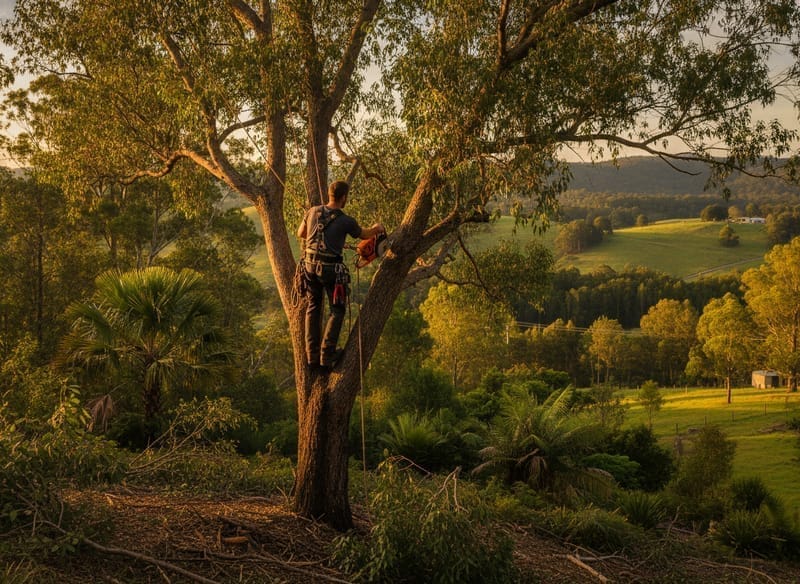
Our climbers make precise cuts at branch collars, not random mid-branch chops.
We chip all the debris and take it away, leaving your yard pristine.
When large native eucalypts or planted exotics start crowding your roofline, expert intervention is required. If you are looking for professional Tree Lopping Valley Heights, our qualified arborists provide safe, effective canopy reduction tailored to your property. Whether you are managing an overgrown Smooth-barked Apple leaning toward your gutters or bringing a massive Radiata Pine down to a more manageable size, we have the skills and equipment to handle the job properly.
Living in the lower Blue Mountains means balancing beautiful established gardens with significant bushfire and storm risks. Severe summer thunderstorms and winter westerly gales easily snap weak or over-extended branches, turning beautiful canopies into serious hazards.
When homeowners ask us for tree lopping, they generally want to reduce a tree's height or spread to protect their assets and improve sunlight. We achieve this size reduction safely, using modern arborist techniques that protect the health of your trees while drastically lowering the risk of sudden limb drop over your home. We do not just hack trees apart; we provide strategic canopy management that ensures long-term safety and aesthetic appeal for your acreage or residential block.
The term "lopping" traditionally refers to indiscriminate topping—slashing branches in half and leaving bare, ugly stubs. When unqualified operators perform this kind of aggressive tree lopping on your property, the results are almost always disastrous. Stripping a tree of its leaf mass forces it into shock, prompting rapid, weakly attached epicormic regrowth. In the Blue Mountains, where high winds and severe weather are guaranteed, these weak epicormic branches are the first to snap and crash through your roof, car, or fence. Our team takes a vastly different, highly professional approach. As AQF-qualified arborists, we understand that you want the tree smaller, safer, and away from your house. Instead of destructive lopping, we use techniques governed by the Australian Standard for Pruning of Amenity Trees (AS4373). By making precise cuts at the branch collar, we can significantly reduce the height and spread of your tree without compromising its structural integrity or introducing decay. The ultimate solution is smart, targeted canopy management. We can thin the crown to let light in, lift the lower branches for pedestrian clearance, or carefully reduce the overall canopy volume. You get the smaller, safer tree you asked for, but with strong, healthy growth that will not become a hazardous liability during the next East Coast Low.
When Valley Heights residents ask for tree lopping, they usually need to reduce the size, weight, or spread of a dominant tree. Here are the professional, standards-compliant techniques our climbers use to achieve your goals safely.
The safest alternative to traditional topping. We selectively prune branches back to appropriate lateral growth points, reducing the overall height and spread of the canopy while maintaining the natural shape of the tree, all without leaving disease-prone stubs.
Removing the lowest branches of the canopy to increase clearance over driveways, footpaths, or your roofline. This provides immediate hazard reduction, clears sightlines, and improves light penetration into your yard and home.
Removing selective secondary branches throughout the canopy to reduce wind resistance and excess weight. This allows high winds to pass safely through the tree rather than catching the foliage like a sail during severe mountain storms.
Targeting specific problematic branches—such as those rubbing against powerlines, encroaching on balconies, or showing early signs of decay—while leaving the rest of the healthy canopy completely intact.
When a tree has outgrown its space entirely, is severely diseased, or sits too close to foundational structures, partial lopping may not be viable. In these cases, we perform a safe, section-by-section complete removal.
We pride ourselves on a transparent, highly professional approach from the moment you request a quote to the final site cleanup.
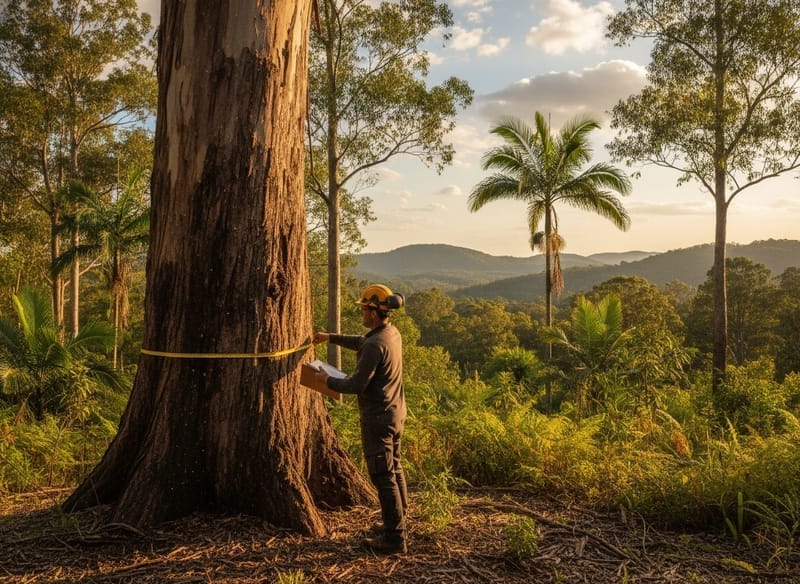
First, we conduct a comprehensive site assessment at your Valley Heights property. We listen to your exact concerns—whether it is clearing heavy branches from over the roof or reducing the height of a dominant Sydney Peppermint. We then advise on the best AS4373-compliant method to achieve your goals safely and legally.
Next, we assess local regulations. If your tree exceeds the Blue Mountains City Council threshold of 4 metres in height or canopy spread, we will guide you on the necessary Approval to Manage Trees permit, or help determine if the work falls under an Asset Protection Zone (APZ) or 10/50 clearing code exemption.
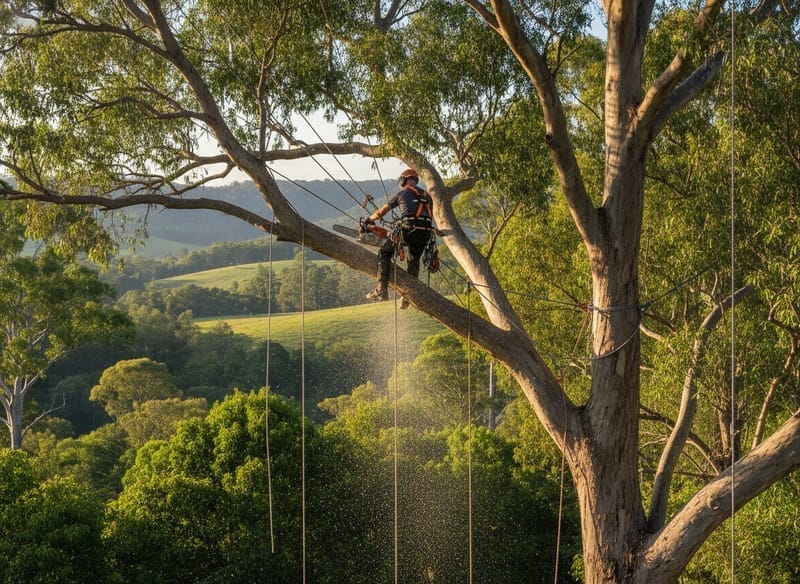
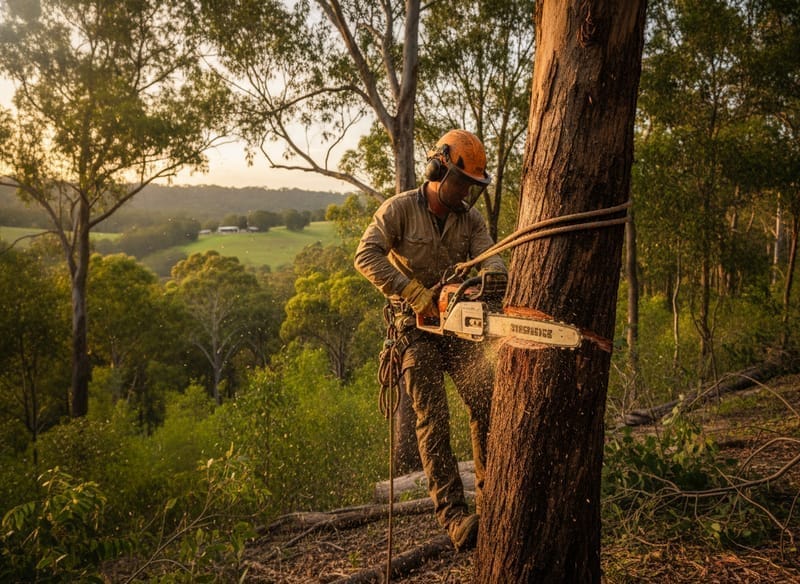
On the day of the job, our climbers arrive fully equipped with top-handle chainsaws and heavy-duty rigging gear. For steep or rear-gully blocks where machinery cannot reach, we use advanced double-rope access techniques to systematically reduce the canopy. Every heavy piece of timber is lowered safely to the ground via friction devices, ensuring zero impact on your landscaping or structures below.
Finally, our ground crew processes all cut branches through our high-capacity wood chippers. We rake and blow down your site, leaving your yard impeccably clean, and cart the mulch away in our tipper trucks—unless you prefer us to leave it on-site for your garden beds.
Canopy reduction and climbing work carries inherent risks, which is why compliance and safety are non-negotiable for our team. We perform all pruning and lopping alternatives strictly in accordance with AS4373 (Pruning of Amenity Trees), ensuring the longevity and stability of your vegetation.
Every job we undertake is protected by comprehensive public liability insurance, and all our staff are fully covered by WorkCover. Our on-site operations are led by AQF Level 3 qualified climbing arborists who hold all necessary tickets, including Working at Heights, EWP operation, and First Aid. We rely on rigorously inspected rope-access gear and professional rigging equipment to ensure absolute safety on every single job.
When planning Tree Lopping Valley Heights, understanding the local environment and strict council regulations is critical. Valley Heights experiences a warm temperate climate that encourages rapid canopy growth, coupled with an extreme bushfire risk. Properties here frequently require diligent hazard reduction and the ongoing maintenance of clear Asset Protection Zones (APZs). Under the Blue Mountains Development Control Plan 2015 (Part C5), you need a permit to prune or remove any tree over 4 metres tall or with a canopy spread wider than 4 metres. This strict trigger catches native eucalypts like Red Bloodwoods as well as planted exotics and ornamentals. However, pruning work executed strictly to AS4373 standards often meets council exemption criteria, provided it does not remove excessive live canopy. Our deep local knowledge ensures we perform your canopy reduction work legally, keeping you entirely compliant with council overlays while effectively protecting your property from bushfire and storm hazards.
Once we have completed a professional crown reduction or canopy thin, your tree will require minimal immediate care, but ongoing monitoring is essential. A properly pruned tree will respond by healing the collar cuts naturally, avoiding the explosive, weak epicormic growth caused by poor lopping practices. During dry mountain spells, particularly in the warmer months, deeply water the root zone to help the tree recover from the loss of foliage. We strongly recommend inspecting your large trees annually, and after severe winter gales or thunderstorms. If you notice any hanging branches, sudden dieback, or structural changes in the canopy, call us back for a follow-up assessment. Regular, scheduled maintenance every few years is the most effective way to keep your large trees safe, healthy, and beautifully formed.
Pricing for canopy reduction depends on the tree's size and access.
We provide honest advice and free quotes. Call us before you hire a 'lopper'.
We provide expert tree canopy management in Valley Heights and surrounding areas.
Get it done safely and legally by qualified arborists. Contact us for a free quote.
Get a Free Quote