Structural Integrity
Keep the natural strength of the tree intact to withstand wind.
Looking to reduce tree height? We provide safe, council-compliant pruning and height reduction alternatives.
Providing expert canopy management in Springwood and surrounding suburbs.
If you are searching for tree lopping Springwood to manage an oversized tree, we can help with professional alternatives.
Eucalypts in the Blue Mountains respond very poorly to lopping. A topped Blue Mountains Ash will rapidly develop a dangerous, top-heavy canopy that easily fails during summer storm cells.
Keep the natural strength of the tree intact to withstand wind.
Avoid council fines by using approved pruning methods.
Maintain the natural, beautiful shape of your canopy rather than an ugly stumped look.
We discuss why you want the tree lopped (e.g., too much shade, dropping leaves).
We suggest the best arboricultural method to achieve your goal.
If significant reduction is needed, we help with BMCC approval.
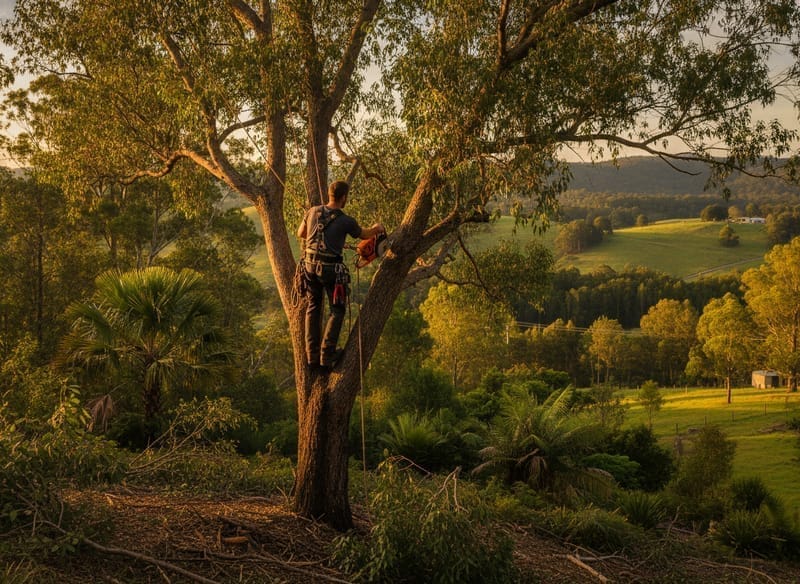
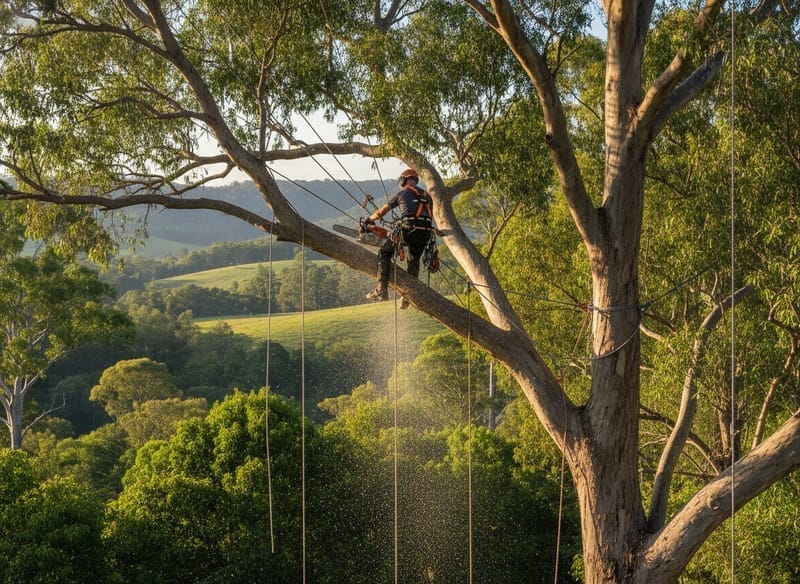
Our climbers carefully reduce the canopy to appropriate growth points.
All waste is removed and chipped.
Living in the lower Blue Mountains means living under an incredible native canopy. But when mature eucalypts start crowding your roofline, dropping heavy debris into your gutters, or blocking the winter sun from your living areas, you need a safe, professional solution to bring that growth under control. If you are looking for Tree Lopping Springwood, our team of qualified local arborists is here to help.
At Blue Mountains Arborist, we understand the unique challenges of maintaining large trees on steep ridge-top blocks, narrow access roads, and bushfire-prone acreage. Homeowners often ask for their trees to be 'lopped' when they really mean they want the tree made smaller, safer, and less intrusive. We do not just hack branches off and walk away leaving an ugly, dangerous stump. We provide targeted canopy reduction and structural pruning that achieves your goals without destroying the health or aesthetic appeal of the tree.
Whether you need to clear an Asset Protection Zone, pull overhanging branches back from your powerlines, or reduce the massive wind-sail effect of a towering Smooth-barked Apple before the winter westerlies hit, our local climbers have the specific skills, qualifications, and equipment to handle it safely and legally.
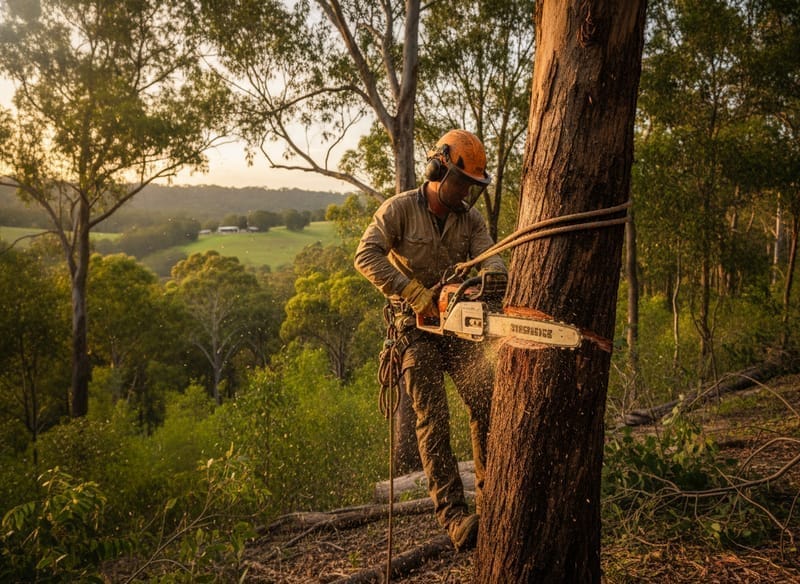
When a large tree grows too dominant for its space, the first instinct is often to just chop the top off. While it is easy to understand why so many homeowners request Tree Lopping Springwood to manage oversized trees, traditional 'lopping' or 'topping' is an incredibly destructive and outdated practice that actually creates more hazards than it solves. Making indiscriminate, flat heading cuts across large branches removes the tree's primary food source and leaves giant open wounds that the tree cannot heal. In a desperate bid to survive, the tree responds by pushing out rapid, weak epicormic shoots. These new branches grow incredibly fast but are poorly attached to the trunk. They are highly prone to snapping and falling during the severe, damaging thunderstorms we get through the Blue Mountains summer. Furthermore, the large stubs left behind will quickly rot, introducing irreversible decay deep into the heartwood of the trunk. Our professional approach is entirely different. As qualified arborists, we use scientifically backed, AS4373-compliant pruning techniques to achieve the exact same goal: making your tree smaller, safer, and less intrusive. Instead of ugly topping cuts, we perform proper crown reductions. We prune back to suitable lateral growth points and natural branch collars, allowing the tree to compartmentalise the wound and heal naturally. You get the clearance and peace of mind you need, and the tree remains structurally sound, safe, and visually appealing for years to come.
When locals call us to lop a tree, we conduct a thorough site assessment of the species, structure, and location. We then apply the correct arboricultural technique to achieve the size reduction you need safely, keeping you compliant with local council regulations.
The safest and most effective way to reduce the overall height and spread of a mature tree. We selectively cut branches back to suitable lateral growth points, shrinking the canopy mass while maintaining the tree's natural shape and structural integrity.
If lower branches are blocking steep driveways, hanging over your roof, or obstructing your view of the gullies, we systematically remove the lower limbs to raise the canopy height and provide clear, usable space beneath.
This targets specific problematic branches without altering the entire tree's canopy. It is the perfect technique for removing heavy, over-extended limbs that overhang your home, shed, or neighbour's fence line.
We carefully remove secondary and tertiary branches throughout the canopy to reduce overall foliage density. This allows more natural sunlight into your yard and significantly reduces the dangerous wind-sail effect during severe westerly gales.
Bushfire hazard reduction pruning tailored specifically to your property's overlays. We separate overlapping canopies, raise lower limbs to prevent fire ladders, and remove fine fuels to comply with RFS guidelines and protect your home.
We run a seamless, highly professional operation from your very first phone call to the final sweep-up, tailored specifically to the challenging terrain of the Blue Mountains.
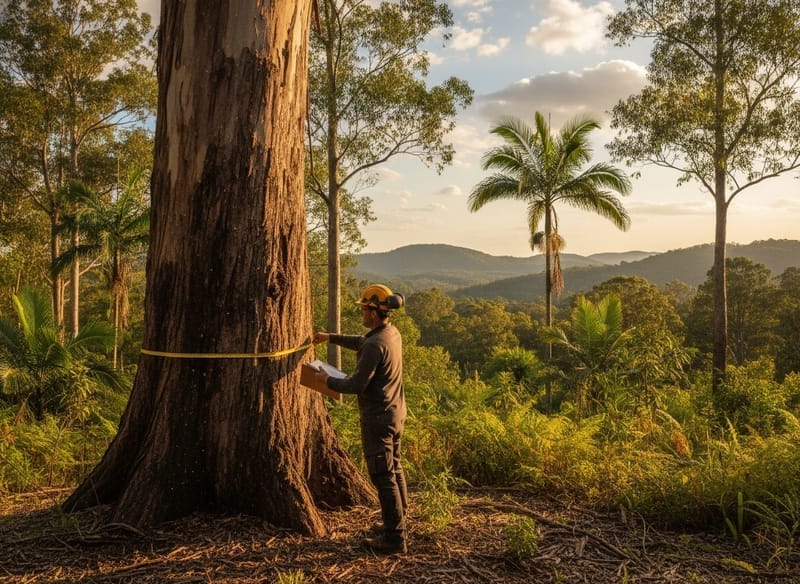
First, we conduct a comprehensive on-site assessment. We listen to what you want to achieve with the tree, evaluate its health, and check the Blue Mountains City Council regulations. Because any tree over 4 metres in height or with a 4-metre canopy spread triggers the need for a permit under Part C5 of the Development Control Plan, we will advise you exactly what council approvals or exemptions apply before any saws are started.
Once the paperwork is approved, our expert climbers access the tree using advanced single and double-rope techniques. This rope-access capability is essential in Springwood, where many rear yards drop off into steep, inaccessible gullies, rendering heavy elevating work platforms useless. We carefully rig and lower heavy branches down to the ground using specialized friction devices, ensuring your roof, understory gardens, and retaining walls are completely protected.
Finally, our ground crew processes all the cut limbs through our high-capacity 12-inch wood chippers parked safely on the street. We can leave the premium aged mulch on-site for your garden beds or cart all the green waste away in our tipper trucks, leaving your property spotless.
Tree work is inherently high-risk, especially on the challenging, steep blocks typical of the Blue Mountains. Our field team consists of AQF Level 3 certified arborists and climbers who are extensively trained in safe rope-access, advanced rigging, chainsaw operation, and aerial rescue. For complex development applications or council permit disputes, we also have AQF Level 5 consulting arborists available to draft formal arboricultural reports and AS4970 tree protection plans.
We strictly adhere to the AS4373 Pruning of Amenity Trees standard, ensuring every single cut we make promotes long-term tree health and structural stability. Blue Mountains Arborist is fully public liability insured and carries comprehensive WorkCover for all employees, giving you complete peace of mind while heavy timber is being rigged above your property.
Operating safely in Springwood requires highly specific local knowledge and specialized equipment. The lower mountains are dominated by towering native species like the Sydney Peppermint, Red Bloodwood, and Smooth-barked Apple. While these eucalypts create the beautiful aesthetic of the area, they also drop incredibly heavy limbs during our fierce winter gales and severe summer storm systems.
Under the Blue Mountains Development Control Plan 2015, the vegetation protection trigger is incredibly low. Any tree 4 metres tall or with a 4-metre spread requires formal council approval via the NSW Planning Portal to prune or remove. Furthermore, almost every single property here sits in a mapped bushfire-prone area. Following the devastating 2013 Springwood and Winmalee fires, maintaining your property's Asset Protection Zone (APZ) is both a legal obligation and a critical practical necessity for survival.
We navigate these strict council overlays every single day. Whether you are dealing with a 10/50 Vegetation Clearing Code entitlement area, managing vegetation on slopes over 18 degrees that require careful ecological consideration, or simply trying to get more winter sun onto your deck, we understand the local compliance landscape inside out.
Proper canopy reduction is a long-term investment in your property's safety and value. After we complete the structural pruning, it is important to monitor the tree as it adjusts to its newly reduced shape. Keep the critical root zone well-watered during extended dry summer spells to reduce environmental stress, and consider spreading the woodchip mulch we leave behind to retain soil moisture. Even with expert, AS4373-compliant cuts, large eucalypts will eventually push out new growth as they recover their photosynthetic capacity. We recommend having our team return every three to five years to inspect the canopy and perform light formative pruning. Give us a call before the summer storm season if you notice any new deadwood, hanging branches, or rapid, dense regrowth.
The cost of canopy reduction depends on the tree size and the required outcome.
We provide honest, fixed-price quotes for all tree work.
Educating and servicing the community across the Blue Mountains.
Call our qualified arborists today to discuss safe canopy reduction.
Get a Free Quote