Restored Access
Quickly regain use of your driveway, garden, and outdoor living areas.
Fast, safe cleanup of fallen limbs, shattered canopies, and unstable trees after extreme weather.
Clearing storm damage throughout Mount Riverview and surrounds.
Our Storm Damage Tree Removal Mount Riverview service provides thorough cleanup and hazard mitigation after intense weather events.
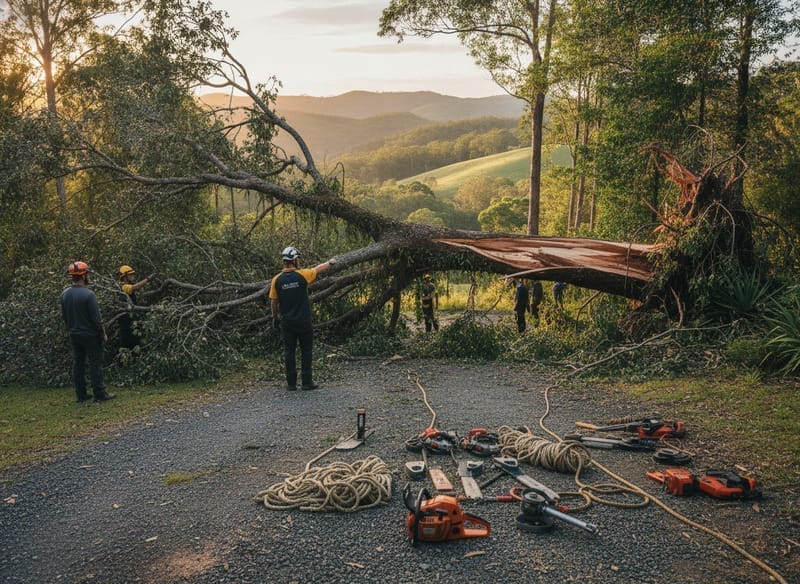
Mount Riverview experiences severe East Coast Lows that saturate the sandstone ridges, leading to widespread windthrow among large eucalypts. We have the heavy chippers and trucks to handle massive volumes of storm debris.
Quickly regain use of your driveway, garden, and outdoor living areas.
We identify and remove weakened branches before the next storm hits.
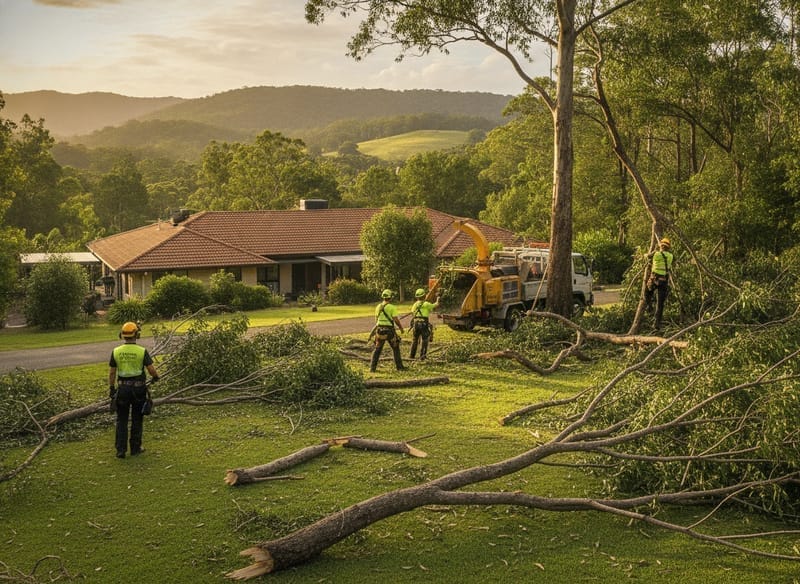
We take away all the mess, saving you endless trips to the Blaxland waste facility.
We inspect your property to identify all fallen and dangerously hung-up material.
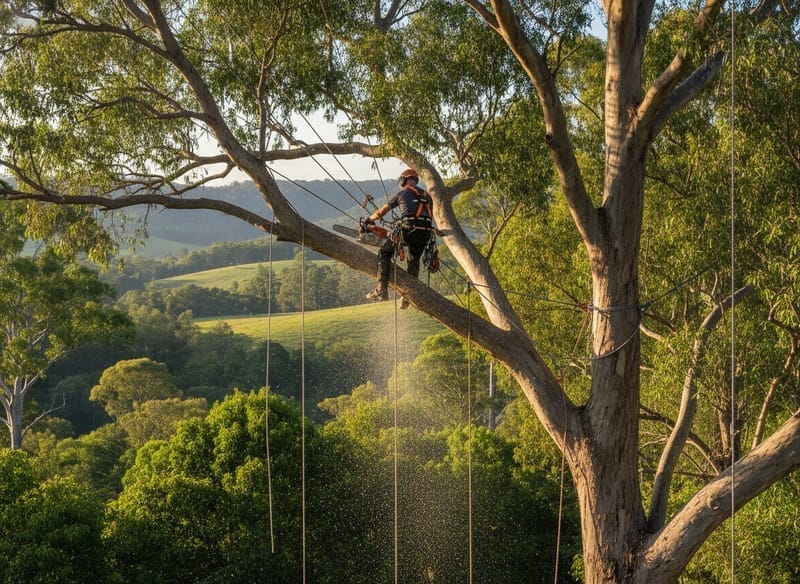
Our climbers safely release tension in snapped limbs to prevent unpredictable snapping.
We cut up fallen trees, run the brush through our chippers, and stack or remove logs.
We ensure no hazardous branches remain suspended in your canopy.
Living on the escarpment and ridge lines of the lower Blue Mountains comes with incredible views, but it also means serious exposure to extreme weather. When severe thunderstorms or winter westerly gales hit our region, the combination of saturated sandstone soils and heavy native canopies often results in catastrophic tree failures. That is why having access to a reliable, local team for Storm Damage Tree Removal Mount Riverview is essential for homeowners, acreage owners, and property managers in the area.
At Blue Mountains Arborist, our local crews understand the urgency of a fallen Red Bloodwood or a hung-up Smooth-barked Apple limb threatening your roofline. Whether a tree has crushed a boundary fence, blocked your driveway, or poses an imminent threat to your home, our highly trained climbers and heavy machinery operators are equipped to handle the crisis safely and efficiently. We secure the site, protect your property from secondary damage, and navigate the complex cleanup process so you can get back to normal.
After a severe weather event rips through the lower mountains, it can be tempting to fire up a chainsaw and tackle the mess yourself. However, storm-damaged trees are incredibly unpredictable and dangerous. Fallen or partially uprooted trees hold massive amounts of hidden tension and compression forces. A single wrong cut by an inexperienced operator can cause a massive log to roll, a hung-up limb to snap back, or the root plate of a shattered eucalypt to suddenly stand back up, causing severe injury or further property damage. Furthermore, unqualified "loppers" often make improper cuts or use topping methods on surviving trees, directly violating AS4373 pruning standards and setting those trees up for weak epicormic regrowth and rapid decay. Our solution is rooted in genuine arboricultural expertise. As fully qualified AQF Level 3 climbers and AQF Level 5 consulting arborists, we assess every storm-damaged tree with a trained eye. We identify the structural integrity of remaining branches and use advanced rope-access rigging or spider lifts to dismantle hazards section by section. By trusting our team with your storm cleanup, you ensure the job is done safely, legally, and to the highest Australian standards, protecting your home and preserving the remaining canopy on your property.
When responding to emergency storm jobs across the mountains, our crews follow a strict, highly technical operational procedure to secure your site efficiently.
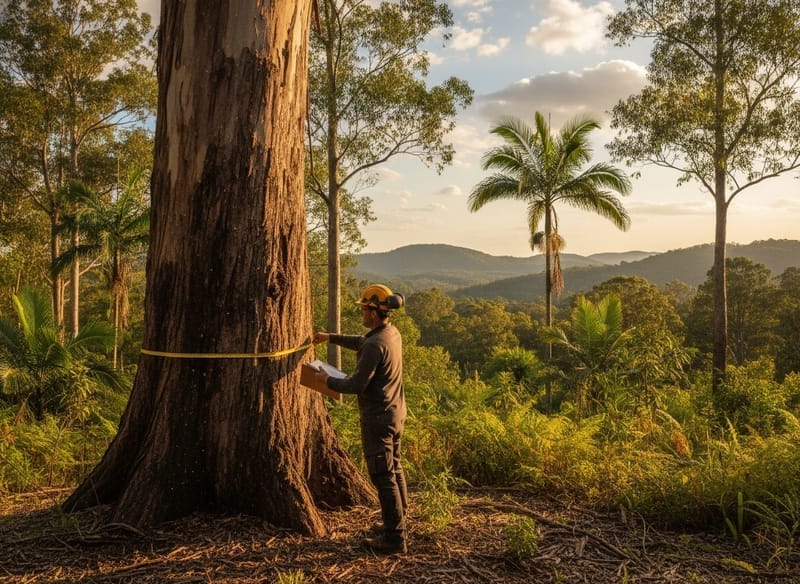
We walk the property to identify immediate hazards (trees over houses, power lines, or driveways) versus secondary cleanup. We tag and prioritize tasks based on safety risk and structural compromise, ensuring the most dangerous threats are neutralised first.
For trees heavily damaged but still standing, our AQF Level 3 climbers utilize double-rope access techniques and specialised rigging blocks to lower shattered canopy sections to the ground safely, eliminating the risk of impact to surrounding assets.
When massive eucalypts or planted pines uproot onto houses or across tight residential blocks, we deploy crane-assisted removal. This allows us to lift multi-ton timber sections vertically out of the property, preventing any further structural damage on steep or narrow sites.
Processing fallen timber requires technical ground-saw operations, using powerful saws like the MS500i or 572XP, to safely relieve stored energy in twisted trunks and limbs without causing the log to barber-chair or roll unpredictably.
Before making any cuts, our team takes comprehensive photographic evidence and prepares detailed, itemized quotes outlining the scope of works and hazard mitigation for seamless submission to your insurance provider.
Navigating the aftermath of a severe storm can be overwhelming, which is why we have streamlined our emergency response protocol for local residents. Here is how our team handles your crisis from the first call to the final sweep. - Step 1: Emergency Triage and Consultation When you contact us, we rapidly deploy to your property. We conduct a thorough visual assessment to identify immediate life-and-property hazards, securing the site and determining the safest approach. - Step 2: Insurance Documentation and Quoting Before altering the scene, we take detailed photographs and draft a comprehensive, line-item quote. This ensures you have the exact evidence and documentation required for a smooth and fast insurance claim. - Step 3: Make-Safe and Hazard Mitigation Our first operational priority is removing the immediate danger. We use targeted cuts, elevating work platforms (EWPs), and complex rigging to carefully remove trees or limbs suspended over roofs, power lines, or access routes. - Step 4: Full Dismantling and Processing Once the immediate threat is neutralized, we process the remaining fallen timber. Our ground crews use heavy-duty wood chippers to process limbs on-site into mulch and load large logs into our tipper trucks for removal. - Step 5: Final Site Cleanup and Inspection We do not leave your property in a mess. We rake up the storm debris, process the last of the foliage, and conduct a final walk-through with you to ensure all storm damage has been safely resolved.
Safety and legal compliance are the foundation of our operations. Every response to storm damage is conducted in strict alignment with AS4373 (Pruning of Amenity Trees) to ensure any surviving canopy is properly managed, outright avoiding the dangerous practice of lopping. Our team is fully insured for public liability and covered by WorkCover, giving you absolute peace of mind when we operate heavy machinery on your block. We also navigate the complexities of local planning schemes. While imminent danger exemptions exist under Blue Mountains City Council rules, we ensure that all emergency hazard reduction and Asset Protection Zone clearing aligns with the 10/50 Vegetation Clearing Code of Practice and AS3959 bushfire construction standards.
Executing Storm Damage Tree Removal Mount Riverview requires deep local knowledge. Properties here often sit on steep sandstone slopes or back onto dense national park gullies, making standard machinery access nearly impossible. When an East Coast Low or intense summer thunderstorm drops a mature Scribbly Gum or Radiata Pine on a steep-gradient block, we rely heavily on specialized rope access and spider lifts rather than standard wheeled cherry pickers.
Furthermore, the Blue Mountains City Council enforces a strict Approval to Manage Trees under Part C5 of the Development Control Plan for any tree over 4 metres in height. While genuine emergency removals of dead, dying, or imminently dangerous trees are generally exempt, assessing this boundary requires an expert eye. If a storm-damaged tree is located in a mapped ecological buffer or heritage area, our AQF Level 5 consulting arborists can step in to provide the required arboricultural assessments, ensuring your cleanup remains totally legally compliant.
After the storm debris is cleared, it is crucial to monitor the remaining trees on your property. High winds and saturated soils can compromise root systems without causing immediate failure. Keep an eye out for minor soil heaving around the base of large eucalypts, structural cracking in the trunk, or sudden leaning over the days following an event. We highly recommend scheduling a routine hazard assessment with our team before the next storm season hits. Proactive crown thinning and selective deadwooding in accordance with AS4373 will significantly reduce the wind resistance of your canopy and lower your future risks. If you notice any unsettling changes in your remaining trees, call our team for a professional evaluation.
Storm damage cleanup is generally quoted based on the volume of debris and complexity of the hazards.
We provide detailed, itemised quotes that you can submit directly to your insurer.
We provide post-storm cleanup across the Lower Mountains.
Contact our team for fast, safe storm damage cleanup in Mount Riverview.
Request a Cleanup Quote