Restored Access
Get your car out of the driveway and use your yard safely again.
Comprehensive post-storm cleanup for fallen branches, broken canopies, and shattered timber.
Post-storm tree services for Katoomba and the Upper Mountains.
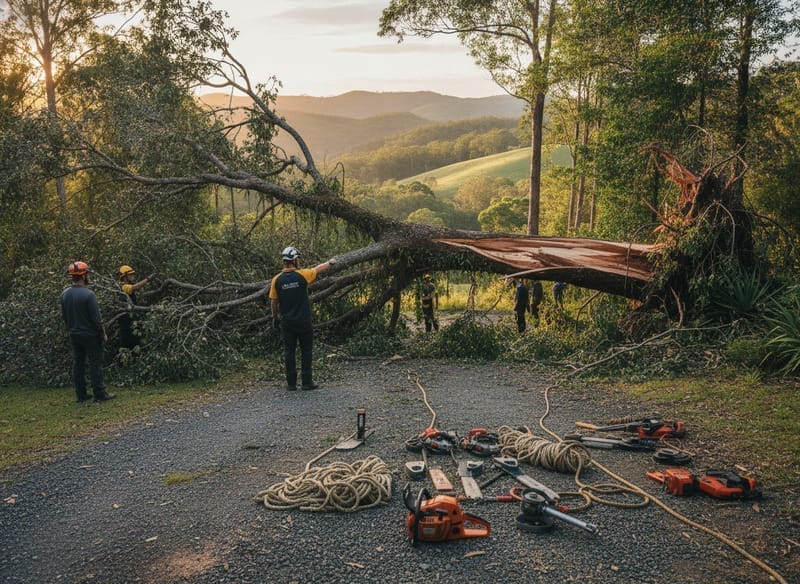
When locals need Storm Damage Tree Removal Katoomba relies on us. After severe thunderstorms or winter gales, properties are often littered with huge snapped limbs, 'widow-makers' hung up in the canopy, and debris covering driveways. We provide systematic, safe cleanup operations.
Katoomba's Sydney Peppermints and Silvertop Ashes are notorious for shedding heavy limbs during high winds. We specialize in making these canopies safe again after major weather events.
Get your car out of the driveway and use your yard safely again.
Removing hung-up branches stops them falling on you weeks after the storm.
Clean pruning cuts on torn branches give your storm-damaged tree the best chance of survival.
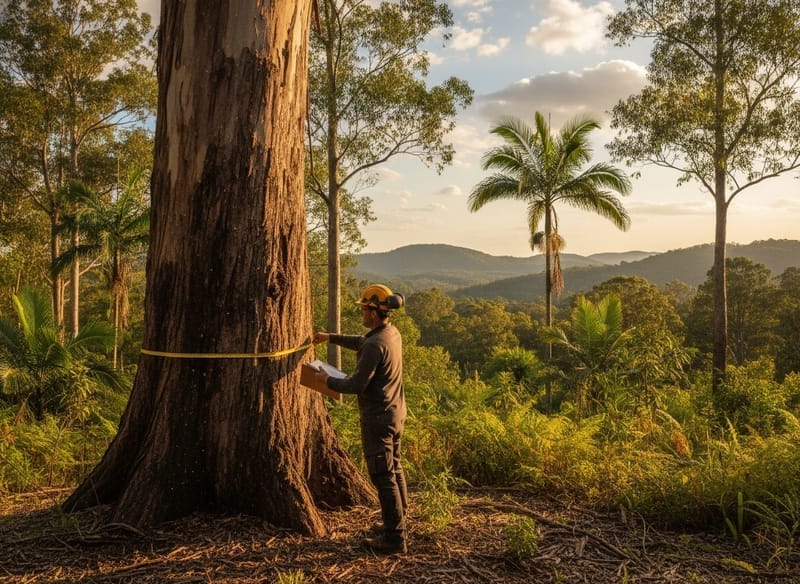
We identify any highly unstable timber suspended in the canopy.
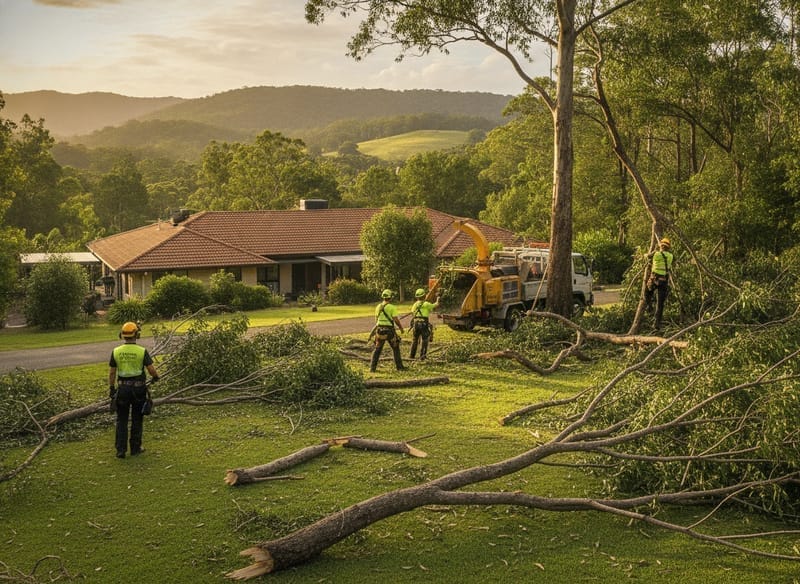
We cut and clear all timber that is blocking access to the property.
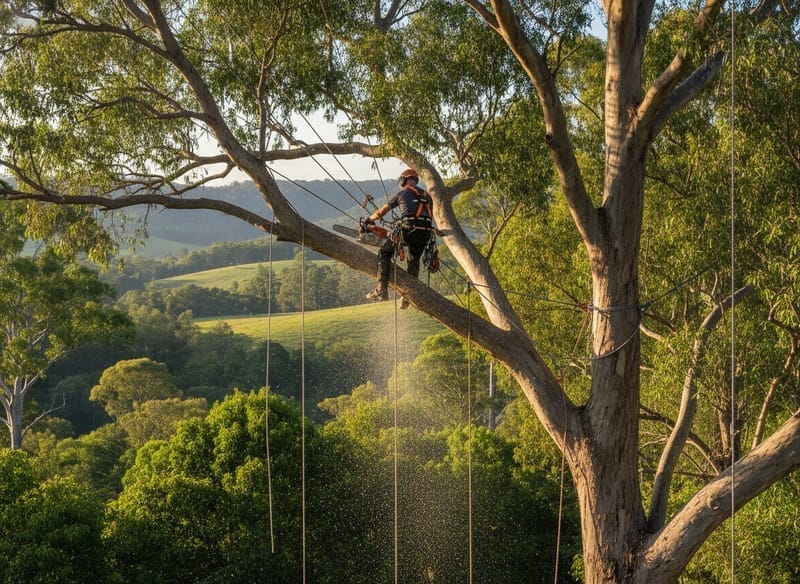
Climbers ascend to remove broken limbs and prune torn branches cleanly.
All mess is chipped into our trucks and hauled away.
Living in the Upper Mountains means sharing our properties with magnificent, towering eucalypt canopies. It also means facing the severe weather systems that batter our ridge lines. When East Coast Lows dump heavy rain on our shallow sandstone soils and brutal winter westerlies sweep through, mature trees are put under immense stress. Branch failures, hung-up limbs, and whole-tree windthrow are common realities for homeowners and property managers in the area. When disaster strikes, you need prompt, professional Storm Damage Tree Removal Katoomba locals can trust to secure their homes and restore access safely. Our team at Blue Mountains Arborist is locally based and highly experienced in navigating the steep terrain and unpredictable weather of the upper escarpment. We understand that a fallen Blue Mountains Ash or Sydney Peppermint over your driveway or roof is a high-stress emergency. We do not just hack away at the mess; our AQF Level 3 climbers and ground crew apply precise arboricultural techniques to dismantle dangerous timber without causing further damage to your property. We are your local experts, ready to mobilise our trucks and specialised equipment the moment a storm clears.
When a severe summer storm or winter gale brings down timber on your property, the urge to start clearing it yourself with a chainsaw can be strong. However, storm-damaged trees present some of the most complex and lethal hazards in arboriculture. Fallen or partially uprooted trees are trapped under immense, unpredictable forces of tension and compression. A single incorrect cut by an untrained person can cause a massive trunk to roll, snap back, or violently spring upward, leading to catastrophic injury. Furthermore, relying on unqualified tradies or "loppers" often exacerbates the damage. Unskilled operators frequently resort to topping or crude lopping, which violates AS4373 (Pruning of Amenity Trees) standards, leaves dangerous stubs, and promotes weak epicormic regrowth that becomes the next storm's hazard. They also lack the insurance and technical knowledge required to safely navigate Katoomba's slopes and gully drops. Our team solves these problems by bringing qualified arboricultural expertise directly to your emergency. We understand the mechanics of root-plate failures in saturated Katoomba soils and know how to read the stored energy in tangled branches. By using advanced rigging, proper target pruning, and safe dismantling techniques, we mitigate the immediate hazard while preserving the health of any surrounding trees that can be saved. We also provide the detailed, itemised quotes and photographic evidence required to streamline your home insurance claim.
Storm-damaged timber behaves entirely differently from a healthy, standing tree. Our emergency response relies on specialised techniques and heavy-duty equipment to safely dismantle unpredictable, high-tension timber on Katoomba's challenging blocks.
We assess the property to categorise hazards. Priority is given to "widow-makers" (hung-up branches), compromised trees leaning over habitable structures, and blocked access routes. Our climbers secure volatile limbs using ropes and friction devices before any cutting begins, ensuring the site is stabilised.
Fallen trees store massive amounts of kinetic energy. Our operators are trained to read the wood and execute precise release cuts using high-powered ground saws like the MS500i. This prevents the trunk from barber-chairing or snapping back, ensuring the safe breakdown of large-diameter trunks.
Many Katoomba blocks slope sharply away from the road, making EWP (cherry picker) access impossible. Our AQF Level 3 climbing arborists use double-rope techniques and advanced lowering systems to systematically dismantle damaged canopies over roofs and glasshouses, lowering heavy sections of timber to the ground under complete control.
When a tree suffers windthrow and the root ball lifts from the saturated sandstone soil, cutting the trunk can cause the heavy root plate to slam back into the ground. We carefully prop, winch, or progressively dismantle the stem to manage the weight transfer, preventing damage to underground services or foundations.
When you call us, our priority is securing your property swiftly and methodically. Step 1: Rapid Site Assessment. We dispatch an arborist to evaluate the site. We check for downed power lines, structural risks to your home, and the stability of compromised trees. We tag each tree by priority, focusing on immediate life-and-property hazards first. Step 2: Insurance Documentation. Before any debris is moved, we capture comprehensive photographic evidence of the damage. We generate a detailed, itemised quote breaking down the scope of work for each tree, which you can hand directly to your insurance provider to expedite your claim. Step 3: Make-Safe. Our climbers and access operators move in to remove the most critical threats. We winch hanging branches out of the canopy and carefully lift fallen timber off roofs, driveways, and fences using mechanical advantage systems and rigging. Step 4: Technical Dismantling. Once the immediate threats are neutralised, we systematically dismantle the remaining damaged structure. Depending on access, we utilise top-handle climbing saws (like the MS201T) or spider lifts to cut and lower the timber safely. Step 5: Processing and Cleanup. We process the limbs through our high-capacity wood chippers, reducing the hazardous debris into valuable mulch. Heavy logs are loaded into our tipper trucks via loader cranes. We leave your Katoomba property safe, clean, and entirely hazard-free.
Operating in the aftermath of a storm requires absolute adherence to safety protocols. All our pruning and salvage operations comply strictly with AS4373 - Pruning of Amenity Trees, ensuring we don't compromise the future structural integrity of trees we can save. When working on development sites or near retained vegetation, we follow AS4970 - Protection of Trees on Development Sites.
Our team is highly credentialed, featuring AQF Level 3 climbing arborists and AQF Level 5 consulting arborists. We hold all necessary high-risk tickets, including Working at Heights, EWP, and First Aid. Blue Mountains Arborist is fully public liability insured and carries comprehensive WorkCover for all employees, giving you total peace of mind when we operate heavy machinery on your property.
Executing a proper Storm Damage Tree Removal Katoomba requires deep local knowledge. The Upper Mountains are characterised by narrow ridge-top plateaus and long blocks that drop sharply into gullies. This steep terrain, combined with high winter rainfall, creates the perfect conditions for massive Silvertop Ash and Smooth-barked Apple trees to uproot in heavy winds. Access for heavy machinery is frequently limited, which is why our rope-access climbing skills are critical.
Tree work here is strictly governed by the Blue Mountains City Council under Part C5 of the Development Control Plan 2015. Generally, any tree over 4 metres in height or canopy spread requires a permit. However, there are vital exemptions for trees that are in imminent danger to life or property, or trees that are already dead. Our AQF Level 5 arborists understand exactly how to document this imminent risk. We ensure your emergency clearing complies with council regulations and the 10/50 Vegetation Clearing Code of Practice, protecting you from heavy fines while we secure your home.
Once the storm damage is cleared, proactive management is essential to protect your property from the next severe weather event. Trees adjacent to the failure site may now be exposed to new wind loads they haven't experienced before. Monitor your remaining eucalypts for signs of heaving soil around the base, new cracks in the trunk, or excessive epicormic growth.
We highly recommend scheduling a routine hazard reduction assessment with our AQF Level 5 consulting arborist before the start of the summer storm season or the winter westerlies. Strategic crown thinning and deadwood removal to AS4373 standards can significantly reduce the sail area of your canopy, minimising the risk of future storm failures.
Storm cleanup is quoted based on the volume of debris and the complexity of the aerial work.
We offer transparent quotes and can prioritise heavily impacted properties.
We clean up storm damage across the Blue Mountains.