Cleaner Yard
Stop the endless cycle of picking up heavy fronds and sticky, rotting berries.
Safe and efficient removal of unwanted palms and messy seed pods.
Palm removal services for Katoomba and the Blue Mountains.
When locals request Palm Tree Removal Katoomba is typically dealing with older planted gardens where inappropriate species like Cocos or Radiata palms have outgrown their welcome. They drop heavy fronds, attract bats with their fruit, and clash with the native sandstone landscape. We remove them safely.
Because Katoomba sits in a World Heritage Area buffer, removing non-native, messy exotics like Cocos palms is a great step toward improving local biodiversity.
Stop the endless cycle of picking up heavy fronds and sticky, rotting berries.
Removing fruiting palms stops attracting bats and rodents to your roof.
Replace out-of-place tropical exotics with appropriate cool-climate or native plantings.
We check the palm's height and nearby obstacles.
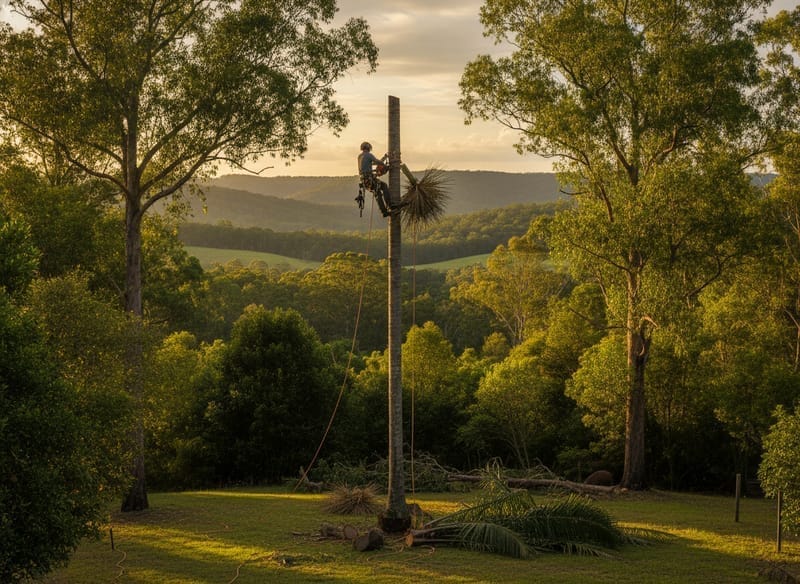
Our climber ascends, cutting away all fronds and heavy seed pods first.
The trunk is blocked down in small sections to prevent ground damage.
Because palm wood is fibrous and heavy, we transport it all off-site.
Katoomba’s cool temperate mountain climate is defined by winter frosts, occasional snowfall, and dramatic escarpment terrain. While our native montane eucalypts thrive here, many palm species planted in older residential gardens eventually struggle, suffer frost dieback, or simply outgrow their designated spaces. When these massive, water-logged monocots become hazardous or die off, you need professional intervention. Blue Mountains Arborist provides specialized Palm Tree Removal Katoomba homeowners and property managers can rely on to safely dismantle and remove failing palms.
Palms are fundamentally different from standard hardwood trees. They are heavy, densely fibrous, and carry massive weight in their trunk and upper frond skirts. When severe winter westerly gales hit the Upper Mountains, weakened or top-heavy palms become a significant risk to homes and powerlines. As a dedicated local arborist team, we have the specialized climbing gear, heavy-duty chippers, and high-capacity trucks required to navigate Katoomba’s steep residential blocks and effectively remove problem palms. Whether you have a towering Washingtonia or a frost-damaged Date Palm threatening your roofline, our climbers are equipped to dismantle it safely.
A common mistake property owners make is underestimating the sheer weight and composition of a mature palm tree. Unlike a Blue Mountains Ash or Sydney Peppermint, palms do not have solid woody trunks. Their trunks are composed of dense, fibrous vascular bundles that hold vast amounts of water. A single meter-long trunk section can weigh hundreds of kilograms. DIY attempts at felling a palm often end in disaster, with heavy sections unpredictably crushing retaining walls, fences, or plunging down steep gully blocks.
Furthermore, palm fronds and seed pods introduce their own dangers. Many species feature viciously sharp spines along their frond bases, while massive seed clusters can snap off and cause serious injury. If left on the ground, fibrous palm waste will not break down like typical eucalypt mulch; it rots slowly, attracting pests and creating an eyesore.
Blue Mountains Arborist provides the definitive solution. We bring professional rigging techniques and specialized machinery to manage the extreme weight of palm sections. Our team safely lowers every piece into a controlled drop zone, ensuring your home, garden, and surrounding native vegetation are completely protected. We then process the notoriously tough fibrous waste using high-capacity chippers and haul it away in our tipper trucks, leaving your property spotless.
Dismantling a heavy, fibrous palm in a confined space requires specialized techniques distinct from standard hardwood tree removal. Our team deploys precise rigging and heavy-duty processing equipment to ensure the job is completed efficiently.
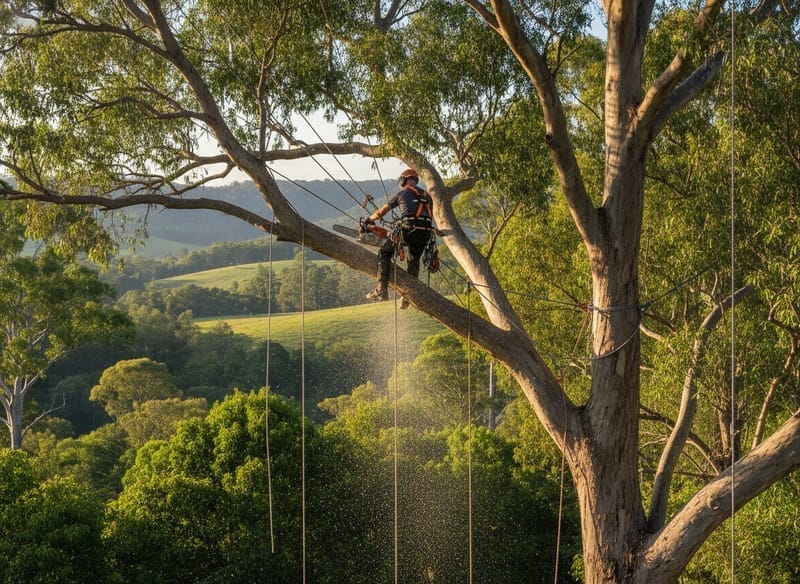
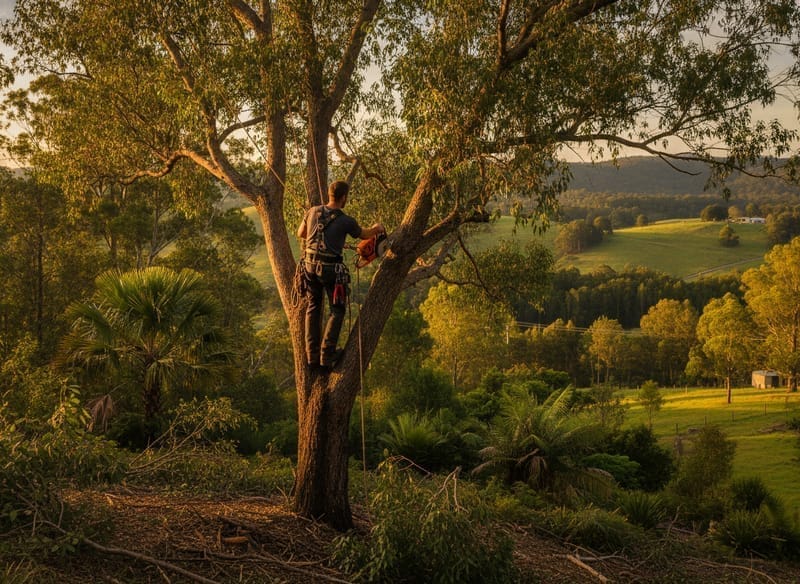
Because we are performing a complete removal, our climbers use heavy-duty climbing spikes and specialized fliplines to ascend the palm trunk safely. For sites on steep escarpment blocks where Elevating Work Platforms (EWPs) cannot reach, this single-rope or double-rope climbing technique allows us to access even the most land-locked palms.
Before dismantling the trunk, we strip the crown. Our climbers carefully cut away the dead frond skirt, live fronds, and heavy fruiting clusters. These are rigged and lowered to the ground to prevent the sharp spines and massive seed pods from damaging the garden or causing injury below.
Palms cannot usually be felled in one piece in Katoomba's tight residential spaces. We use top-handle chainsaws to ring the trunk, cutting it into manageable 'rounds' or blocks. These heavy, water-logged sections are meticulously rigged and lowered via friction devices to a designated drop zone, protecting underlying assets.
Palm material is notorious for wrapping around and jamming standard wood chippers due to its stringy, fibrous nature. Our ground crew utilizes high-torque 9-inch and 12-inch capacity chippers specifically designed to aggressively pull and process tough palm fronds and upper trunk matter, converting them for easy transport.
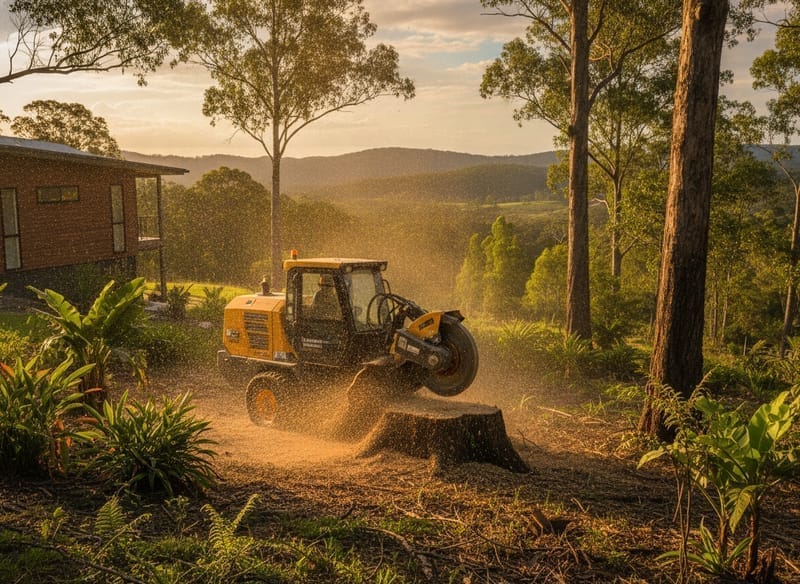
A palm root ball is a dense, expansive mat of fibrous roots rather than deep taproots. We use powerful stump grinders to mill the stump down to 150-300mm below soil grade. This stops the stump from becoming a tripping hazard or fungal breeding ground and allows you to replant or turf over the area.
Every property in the Blue Mountains presents unique access and environmental challenges. When executing your Palm Tree Removal Katoomba project, we follow a strict, standardized process to guarantee safety, compliance, and zero damage to your property.
First, we conduct a comprehensive site assessment. Our quoting arborist inspects the palm’s health, height, and proximity to your home, powerlines, and steep drop-offs. We identify the safest access routes for our tipper trucks and chippers, taking into account Katoomba's narrow streets and sloping blocks. We also check the Blue Mountains City Council mapping tools to confirm whether a permit is required under local overlays.
Once on site, our team establishes a safe working zone. If the palm is located near a busy road, we implement strict traffic management protocols. Our AQF Level 3 climber ascends the palm, clears the heavy fronds and seed pods, and begins the sectional dismantle. Heavy trunk sections are rigged and lowered safely to the ground crew.
Finally, we process all waste. The stringy fronds are chipped, and the dense, heavy trunk rounds are manually loaded or winched into our tipper trucks for complete removal. We rake and blow the site clean, ensuring your garden is left immaculate.
Tree work is inherently high-risk, which is why Blue Mountains Arborist operates strictly by the book. We are fully insured with comprehensive Public Liability and WorkCover insurance, protecting your property and our staff at all times.
Our climbers are qualified to AQF Level 3 in Arboriculture, holding all required tickets for tree felling, working at heights, and elevated work platform operation. While palm removals are complete dismantles, any adjacent pruning of retained canopy is performed strictly to the AS4373 (Pruning of Amenity Trees) standard. If your palm removal is part of a larger property development, our AQF Level 5 consulting arborists can provide the necessary Tree Protection Plans to satisfy AS4970 guidelines and council requirements.
Undertaking palm removal in Katoomba requires deep local knowledge of both the terrain and municipal law. Under Part C5 Tree and Vegetation Preservation of the Blue Mountains Development Control Plan 2015, a permit is typically required to remove any tree that is 4 metres or taller, or has a crown spread exceeding 4 metres. This rule applies to many mature palms, even if they are non-native exotics that have outgrown their welcome.
Katoomba’s landscape adds further complexity. Properties frequently back onto steep bushland gullies covered by escarpment, slope, and landslide risk overlays in the Local Environmental Plan. Removing a massive, heavy palm from an 18-degree slope while massive native canopy like Silvertop Ash or Sydney Peppermint looms overhead demands precision rope-work and advanced rigging. Furthermore, dead palm fronds represent a significant fire hazard; clearing them is often a critical part of maintaining your Asset Protection Zone under AS3959 bushfire prone land requirements. We manage all these local nuances for you.
Once the palm is completely removed and the stump ground down, you will be left with a mixture of soil and fibrous stump mulch. Because palm fibers break down very slowly, we recommend raking out the bulk of the grindings and replacing them with premium topsoil before planting new shrubs or laying turf.
If you have retained other palms on your property, regular maintenance is essential. We advise scheduling an annual frond and fruit cluster removal before the heavy seed pods ripen. This prevents flying foxes and pests from infesting your garden and eliminates the risk of heavy debris falling during winter windstorms. Reach out to our team ahead of bushfire season to ensure your remaining vegetation meets hazard reduction standards.
Palm removal is quoted based on height and difficulty of access.
We offer fast, fixed-price quotes for single palms or total garden clear-outs.
We remove nuisance palms across the Blue Mountains.