Mitigate Hazard Risks
Remove large, unstable trees before winter westerlies cause branch failure.
Safe, efficient tree dismantling and removal for challenging Lower Mountains properties.
Servicing Glenbrook and surrounding Blue Mountains suburbs.
Complete tree removal services handling everything from dead and dangerous gums to council-approved clearing.
Glenbrook properties are often heavily timbered with Smooth-barked Apples and Bloodwoods that overhang homes. Combined with difficult access and slope restrictions, professional removal is essential for safety.
Remove large, unstable trees before winter westerlies cause branch failure.
Clear combustible canopy away from your roofline to protect your home.
We handle the hard labour, complex rigging, and complete site cleanup.
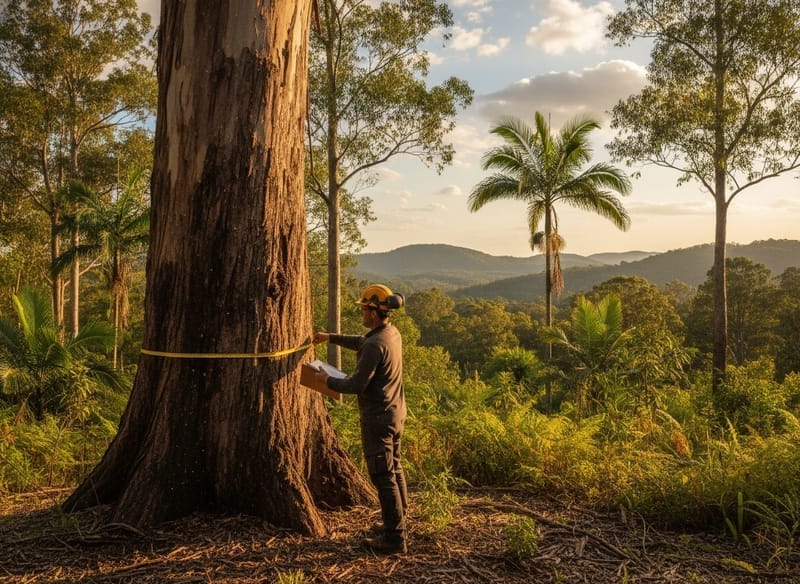
We evaluate the tree's health, structural integrity, and the drop zone.
We confirm if the tree removal is exempt or requires a DA permit.
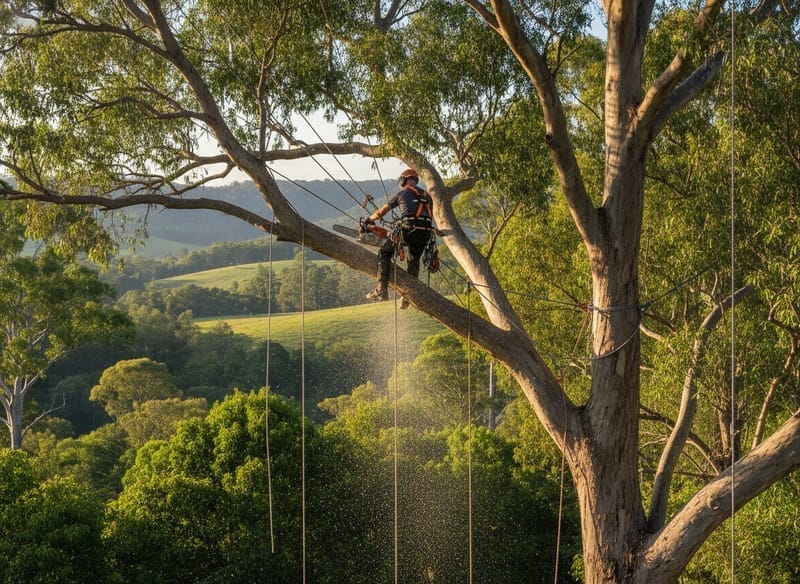
Our arborists safely climb and dismantle the tree piece-by-piece.
All material is chipped and removed, with logs taken away or left for firewood as requested.
When you need professional Tree Removal Glenbrook, you need an arborist who understands the unique terrain and local canopy of the lower Blue Mountains.
Glenbrook acts as the gateway to the mountains, featuring a mix of established residential blocks, expansive acreages, and steep properties that drop away into deep gullies and national parkland. Because almost every property here sits under or near mature eucalypt canopy, managing tree risks is an ongoing reality. Severe thunderstorms in late spring, driving winter westerlies that easily snap branches, and the ever-present bushfire hazard mean that dead, dying, or structurally compromised trees pose a massive risk to homes and families.
At Blue Mountains Arborist, we don't just hack trees down. We provide highly skilled, controlled tree dismantling. Whether you are dealing with a massive Smooth-barked Apple leaning dangerously over your roofline, removing a hazardous Sydney Peppermint, or clearing an Asset Protection Zone ahead of the fire season, our team has the heavy equipment, the climbing expertise, and the local knowledge to get the job done safely.
Removing a mature tree in the Blue Mountains is rarely a straightforward felling job. So, what goes wrong with DIY or under-qualified tree removal?
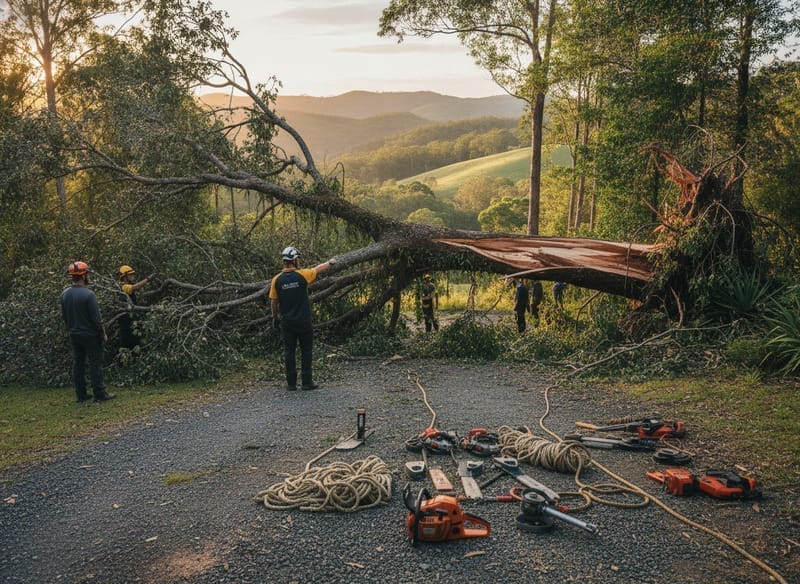
In Glenbrook, tight access roads, sloping blocks, and trees intertwined with powerlines or overhanging verandas make tree removal inherently dangerous. Unqualified 'loppers' or handymen often attempt to fell trees from the base or drop large limbs without friction devices or rigging, leading to catastrophic property damage, smashed fences, or severe injury. The memory of the 2013 Winmalee and Springwood fires means hazard reduction is critical, but panicking and hiring unlicensed operators often results in dangerous halfway-done jobs. Furthermore, illegal clearing without understanding local council overlays can result in massive fines for the homeowner.
Our professional arborists provide the ultimate solution to these risks. As AQF Level 3 certified climbers, we approach tree removal as a highly technical dismantling process rather than a simple lopping exercise. We utilise heavy-duty rigging, advanced friction devices, and elevated work platforms to lower massive sections of timber to the ground with pinpoint accuracy. By securing the work zone and meticulously managing the drop area, we eliminate the risk to your home, your neighbours, and your landscape.
Every block in Glenbrook presents its own access and terrain challenges. Slopes over 18 degrees and narrow side access are standard for our crew. We use industry-leading equipment and highly technical dismantling methods to remove trees safely from even the most constrained properties.
This is our primary method for steep gully blocks or tight yards where machinery cannot reach. Using advanced single and double-rope access techniques, our AQF Level 3 climbers ascend the canopy and dismantle the tree piece by piece. We rig heavy limbs and trunk sections using friction devices, lowering them safely without damaging the ground, landscaping, or nearby structures. Our climbers rely on lightweight, high-power top-handle chainsaws like the MS201T for precise in-tree cuts.
For accessible Glenbrook properties, street-side trees, or highly dangerous dead trees that are unsafe to climb, we utilise cherry pickers and tracked spider lifts. EWPs allow our arborists to position themselves perfectly for each cut, speeding up the removal process and providing a rigid, safe platform for dismantling large, hazardous canopies.
When a massive Turpentine, Red Bloodwood, or overgrown Radiata Pine is positioned over a house with zero drop zone, we employ mobile cranes. The crane takes the weight of massive timber sections as they are cut, lifting them cleanly over your roof and dropping them directly at the chipper on the street. This is the safest and most efficient method for extreme-risk removals.
Only viable on large acreage or open blocks with a completely clear, safe drop zone. We calculate the exact fall trajectory, establish safety exclusion zones, and fell the tree from the base using heavy-duty ground saws like the 572XP or MS500i. We then process the fallen timber on the ground.
We process all branches and limbs on-site using heavy-duty 9-inch to 12-inch capacity wood chippers. The resulting organic mulch can be left on your property for garden use or hauled away entirely in our tipper trucks, leaving the site clean and hazard-free.
We believe in clear communication and meticulous planning from your first phone call to the final site sweep. Here is what you can expect when you engage us for your project.
Step 1: Comprehensive On-Site Assessment. We visit your Glenbrook property to inspect the tree's structural condition, assess its proximity to assets, and identify access constraints. We look at the health of the tree, any potential lean, and the availability of a drop zone to determine the safest removal method.
Step 2: Council Checks and Compliance. We check your specific address against the Blue Mountains City Council mapping to determine if a permit is required. If your property falls under specific overlays, we guide you through the compliance requirements and can provide the necessary arborist reports to support your application.
Step 3: Safe Dismantling. On the day of your Tree Removal Glenbrook service, our crew arrives fully equipped with the right machinery for the site. Whether that means deploying a tracked spider lift, setting up rigging ropes, or coordinating traffic management on a busy road, we methodically dismantle the tree from the top down.
Step 4: Cleanup and Haul Away. Once the tree is down, the heavy work continues. Limbs are fed through our high-capacity wood chippers, and heavy logs are sectioned and loaded into our tipper trucks via loader cranes. We finish by thoroughly raking and blowing down the site, leaving your property immaculate.
Tree removal is a high-risk industry, and protecting your property is our top priority. Our team at Blue Mountains Arborist is fully public liability insured and covered by comprehensive WorkCover for all employees.
We hold all mandatory qualifications, including AQF Level 3 in Arboriculture for our climbing arborists and AQF Level 5 for our consulting arborists who prepare formal risk reports. When a removal is tied to a development application, we strictly adhere to AS4970 - Protection of Trees on Development Sites to ensure retained trees are shielded. From Working at Heights (RIIWHS204D) and EWP licences to local traffic management, our crew operates strictly by the book.
Glenbrook sits in a highly sensitive environmental zone, and local regulations reflect that. Under Part C5 of the Blue Mountains Development Control Plan 2015, you need council approval to remove any tree that is 4 metres or taller, or has a canopy spread of 4 metres or more. This strict trigger catches exotic species as well as native eucalypts, and applications must go through the NSW Planning Portal.
Furthermore, many Glenbrook properties are impacted by escarpment, slope, and terrestrial biodiversity overlays. Removal of trees on slopes over 18 degrees often requires a geotechnical assessment. While the 10/50 Vegetation Clearing Code of Practice allows some clearing near habitable buildings for bushfire safety, the entitlement must be verified parcel by parcel on the RFS tool, as heritage and national park buffers are excluded. We regularly navigate these rules for our clients, ensuring your removal is fully compliant.
Once the tree is safely removed, your site requires minimal but important aftercare.
If you choose to keep the freshly chipped mulch, spread it evenly across your garden beds to retain moisture, but ensure it is kept well clear of brickwork and building foundations to prevent termite ingress.
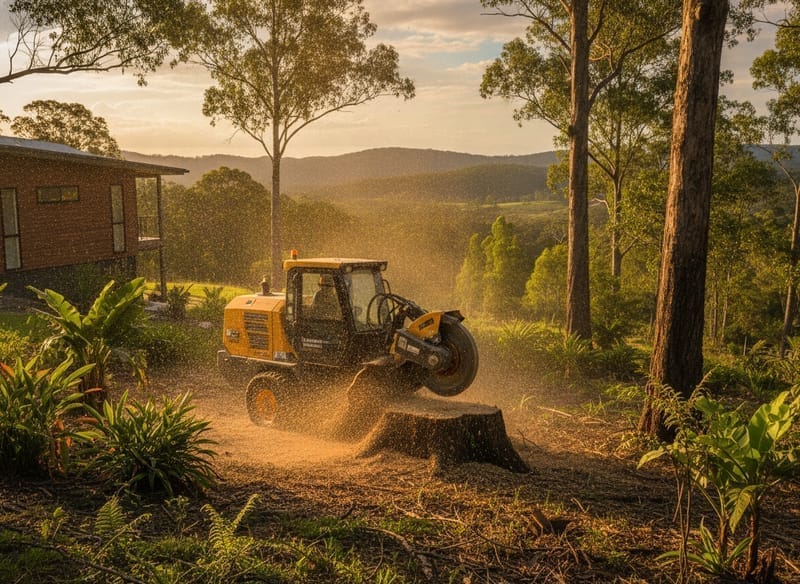
If we have also ground out the tree stump, the resulting mix of soil and wood shavings will settle over a few weeks. You may need to top this area up with fresh topsoil before laying turf or replanting. Monitor the area for any epicormic root suckers, which can occasionally emerge from the remaining root systems of aggressive weed species. Finally, we recommend calling us back for an annual pre-summer canopy inspection to keep your remaining trees safe ahead of the bushfire season.
Every tree removal is unique, especially in the mountains.
We offer a firm, upfront quote after a free on-site inspection.
Providing tree removal services in Glenbrook and nearby areas.
Contact us today for a free on-site quote and advice.
Get a Free Quote