Cleaner Yard
Stop picking up sticky palm seeds and dead, heavy fronds.
Safe dismantling and complete removal of nuisance palms and messy seed pods.
Providing expert palm tree services across Faulconbridge.
When you need Palm Tree Removal Faulconbridge residents trust our team to get rid of messy, unwanted palms safely.
While not native to the upper mountains, many Faulconbridge gardens have Cocos palms planted decades ago. They drop messy seeds, attract bats, and often outgrow their residential spaces.
Stop picking up sticky palm seeds and dead, heavy fronds.
Removing fruiting palms stops fruit bats and rodents from congregating above your cars.
We check the palm's height and nearby obstacles (like pools or fences).
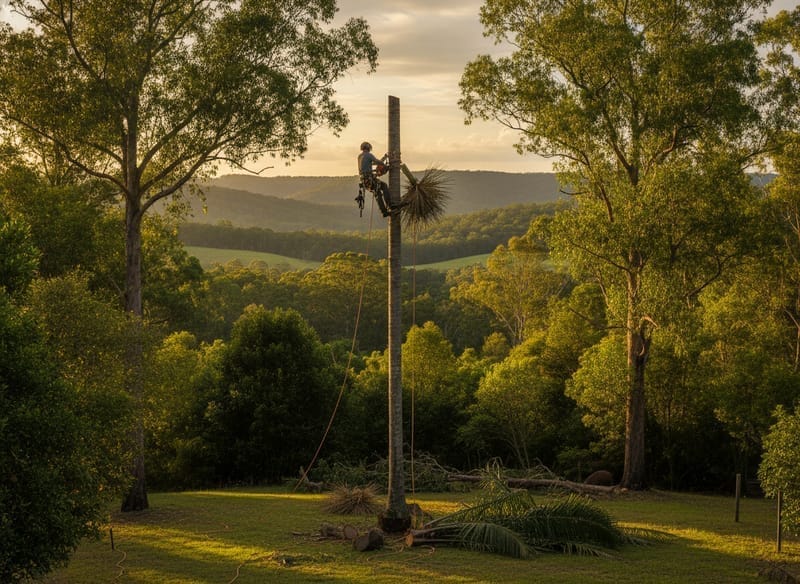
For removals, climbers use spikes to ascend and cut the crown.
The heavy trunk is cut into manageable rounds and lowered safely.
We load the heavy, fibrous waste into our trucks for disposal.
Are you looking for professional Palm Tree Removal Faulconbridge residents trust to handle complex, messy jobs? While the Blue Mountains region is famous for its towering eucalypts, angophoras, and cool temperate natives, many older properties in the mid-to-lower mountains feature planted exotic palms. Species like the Cocos palm, Bangalow palm, and Washingtonia fan palm are common fixtures in local gardens, but they often outgrow their spaces, become a maintenance nightmare, or pose a risk during our fierce winter westerlies.
Our locally based team of qualified climbers and arborists understands the unique challenges of removing palms on steep, heavily vegetated Faulconbridge blocks. Whether you are dealing with a Cocos palm dropping heavy, hazardous fruit clusters that attract flying foxes, or a towering Bangalow palm that is beginning to interfere with your roofline, we have the specialized equipment and rigging expertise to safely dismantle it. We handle everything from complete removals to annual frond and seed pod clean-ups, leaving your property safe, clean, and hazard-free.
Removing a palm tree is vastly different from removing a standard hardwood tree, and DIY attempts frequently result in property damage, equipment failure, or severe injury. Palm trunks are highly fibrous, stringy, and hold massive amounts of water. This composition binds and blunts standard chainsaw chains incredibly fast, making them notoriously difficult to cut without professional-grade ground saws and specialized techniques. Furthermore, the structure of a palm tree presents unique fall hazards. Heavy, spiky fronds and dense seed pods can weigh hundreds of kilograms, and when they detach, they fall unpredictably. On the steep, narrow, or terraced blocks common in Faulconbridge, dropping a palm whole is rarely an option. Misjudging the felling path can easily crush fences, ruin retaining walls, or damage your home. Our team provides a safe, highly controlled solution. We utilize rope-access climbing techniques and heavy-duty rigging to dismantle the palm section by section. If you are retaining the palm, we perform crown cleaning and seed cluster removal strictly aligned with AS4373 Pruning of Amenity Trees standards, ensuring we do not strip the crown too heavily while removing the immediate hazards. We take the risk, the heavy lifting, and the messy disposal completely off your hands.
Palms require distinctly different handling, cutting, and processing techniques compared to standard Blue Mountains canopy trees. Here is how our team safely manages palm removals and maintenance on your property.
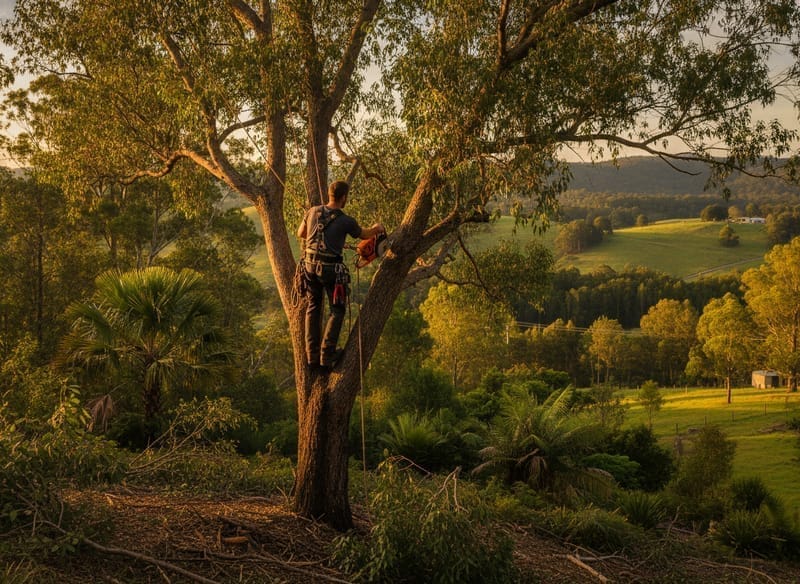
Unlike hardwood trees where climbing spikes damage the live cambium layer, palms do not have a traditional cambium. Our AQF Level 3 climbers safely use palm spikes to access tall, narrow trunks where Elevating Work Platforms (EWPs) cannot reach, which is common on sloped Faulconbridge blocks.
We never 'drop' tall palms in tight residential zones. We rig and lower heavy fronds, seed pods, and trunk sections carefully into a designated drop zone using heavy-duty ropes and friction devices to protect your landscaping, paving, and underground services.
For clients retaining Cocos palms, we offer targeted removal of heavy fruit clusters before they ripen. This prevents the mass dropping of sticky seeds, stops the attraction of flying foxes, and reduces the risk of slip hazards on your driveways and paths.
Palm material is heavily fibrous and slow to break down, making it unsuitable for standard garden mulch. We utilize high-capacity 12-inch wood chippers that are specifically capable of processing stringy palm fronds and trunk sections, ensuring all green waste is thoroughly removed from your site.
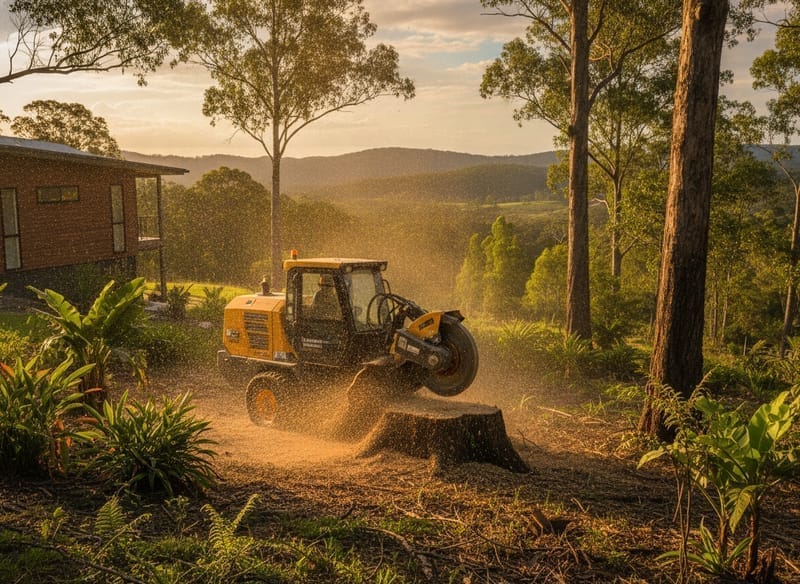
Palms have dense, fibrous root balls that are incredibly difficult to dig out by hand. We deploy self-propelled stump grinders to mill the stump down to 150-300mm below soil grade, allowing you to easily reclaim the space for turf or new native plantings.
When you book our Palm Tree Removal Faulconbridge team, you get a seamless, professional process from the first inspection to the final cleanup.
Step 1: Site Assessment and Quoting. We visit your Faulconbridge property to assess the palm's height, species, and structural condition. We evaluate site access, looking at the slope, proximity to your home, and how close we can get our chipper and tipper trucks to the drop zone.
Step 2: Council Compliance Checks. Even though they are often exotic, palms are still governed by local regulations. We help determine if your palm triggers the need for an Approval to Manage Trees under Blue Mountains City Council's rules, and can assist with the application if required.
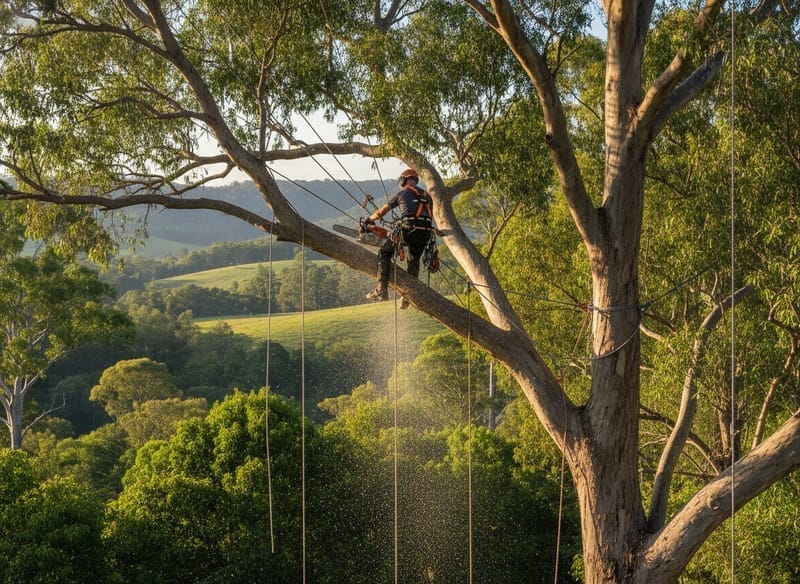
Step 3: Setup and Rigging. On the day, our crew establishes a safe drop zone. If the block is steep or tight, our climbers ascend using spikes and top-handle saws, setting up rigging lines to lower the heavy canopy and trunk sections piece by piece.
Step 4: Processing and Waste Removal. Palm trunks are heavy and fibrous. We process the fronds through our industrial chippers and load the heavy trunk sections directly into our trucks for responsible off-site disposal.
Step 5: Stump Grinding and Cleanup. We grind the fibrous root ball below ground level, backfill the hole, and rake the site entirely clean, leaving your property immaculate.
Palm removals can be highly dangerous, but our business operates with absolute commitment to safety and compliance. We are fully public liability insured and carry comprehensive WorkCover for all our employees, protecting you from any liability in the unlikely event of property damage or injury.
Our on-site crews are led by AQF Level 3 qualified arborists who specialize in advanced rigging and safe felling techniques. When performing palm maintenance rather than removal, all frond trimming and crown cleaning is executed in strict adherence to AS4373 (Pruning of Amenity Trees). We do not engage in poor practices like excessive 'lion-tailing' or over-stripping, which can leave the palm structurally compromised.
Managing palms in Faulconbridge requires specific local knowledge. While palms are not part of the native Blue Mountains canopy, they are still caught under the Blue Mountains City Council's Part C5 Tree and Vegetation Preservation rules. Any tree, including exotic palms, that stands 4 metres or taller, or has a canopy spread greater than 4 metres, generally requires a permit for removal unless specifically exempted under weed declarations.
The local terrain also dictates our approach. Faulconbridge properties often feature long, sloping blocks that back onto gullies, meaning crane access or elevating work platforms are rarely viable. Our climbers rely heavily on rope-access techniques to safely dismantle Cocos and Washingtonia palms by hand. Furthermore, Faulconbridge's exposure to intense winter westerlies means dead or heavy palm fronds become significant aerial hazards if not regularly maintained, making proactive removal or cleaning a priority for local homeowners.
Once your palm is removed and the stump ground out, the remaining soil may be highly acidic or depleted of nutrients. We recommend mixing fresh topsoil and organic compost into the grindings before planting new turf or native Blue Mountains shrubs in that location.
If you have chosen to retain your palms, proactive maintenance is vital. We recommend scheduling an annual visit from our arborist team during late spring or early summer. This allows us to safely remove dying fronds and cut down heavy fruit clusters or seed pods before they mature, preventing messy drops, minimizing trip hazards, and keeping flying foxes away from your property.
Palm removal pricing depends heavily on access, as the waste is difficult to transport.
We offer upfront, free quotes covering all removal and tipping fees.
Removing palms throughout the mid-mountains.